
Kimhekim Spring Summer 2027 “Miniature Runway”。故事作者:Eleonora de Gray,《 RUNWAY MAGAZINE. Photo / Video Courtesy: Kimhekim.
The Lineage of the Miniature Runway
Fashion has always possessed an intimate obsession with miniature scales. Long before digital streams or industrial stadium spectacles, couture traveled the world as miniature ambassador dolls. In the eighteenth and nineteenth centuries, French dressmakers dispatched articulated Poupées de mode—the famous Pandora dolls—across European royal courts to exhibit new silhouettes, intricate stitchwork, and textile innovations to foreign queens before full-sized garments were cut.
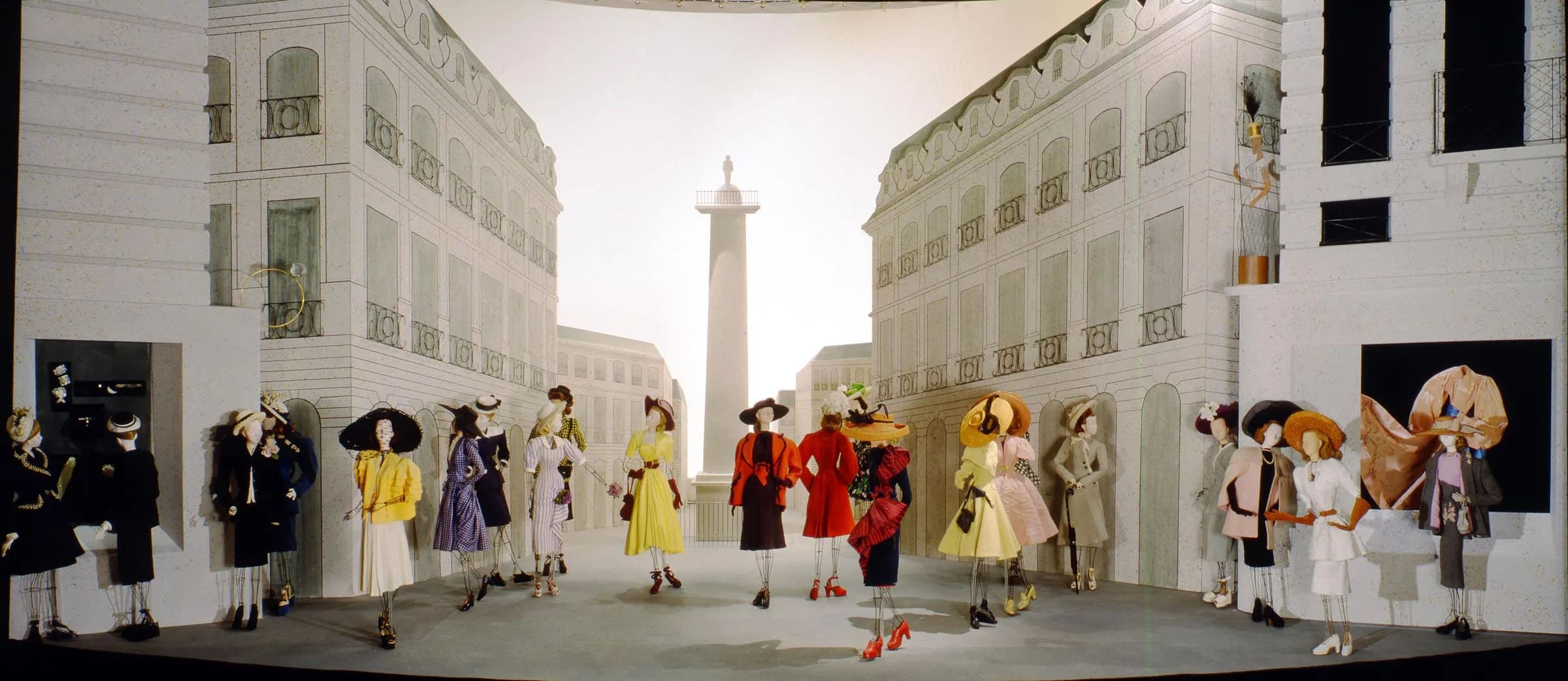
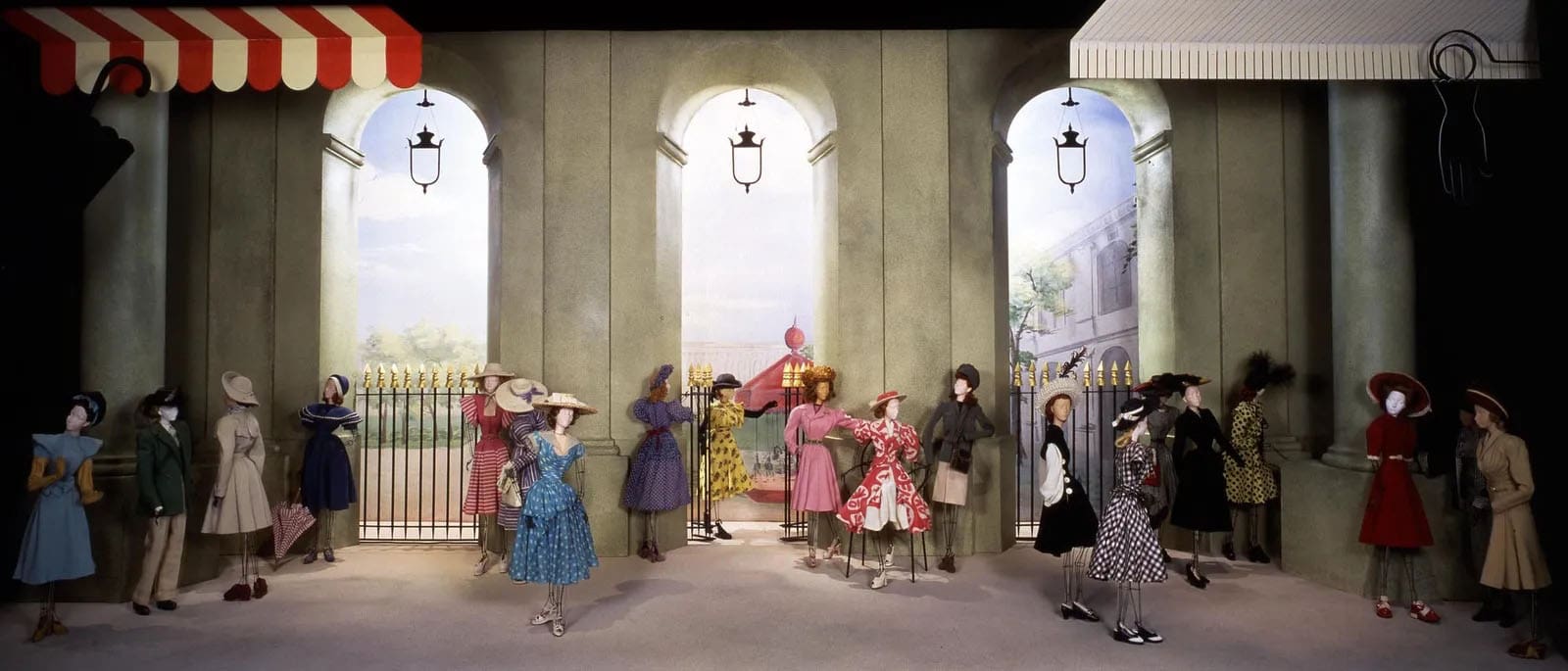
This historic tradition found its most poignant modern resurrection in 1945 with the legendary Théâtre de la Mode. Faced with catastrophic post-war fabric shortages, bombed ateliers, and a ruined infrastructure, the Chambre Syndicale de la Couture Parisienne united to rescue French haute couture through wire mannequins one-third the scale of living women. Set against theatrical decors by André Dignimont at the Palais Royale or Georges Douking along L’Île de la Cité, those tiny mannequins preserved the flame of Parisian needlework, proving that monumental artistry is never a question of yardage.
Decades later, in the Spring/Summer 2004 season at the Fondation Cartier, Maurizio Galante pushed the concept into avant-garde performance with his collection 英勇. Scaling couture down to one-fifth of its original size on custom puppets manipulated live by professional puppeteers while a hidden forty-voice choir sang behind translucent tulle, Galante forced the audience to look past model hype and confront pure architectural geometry.
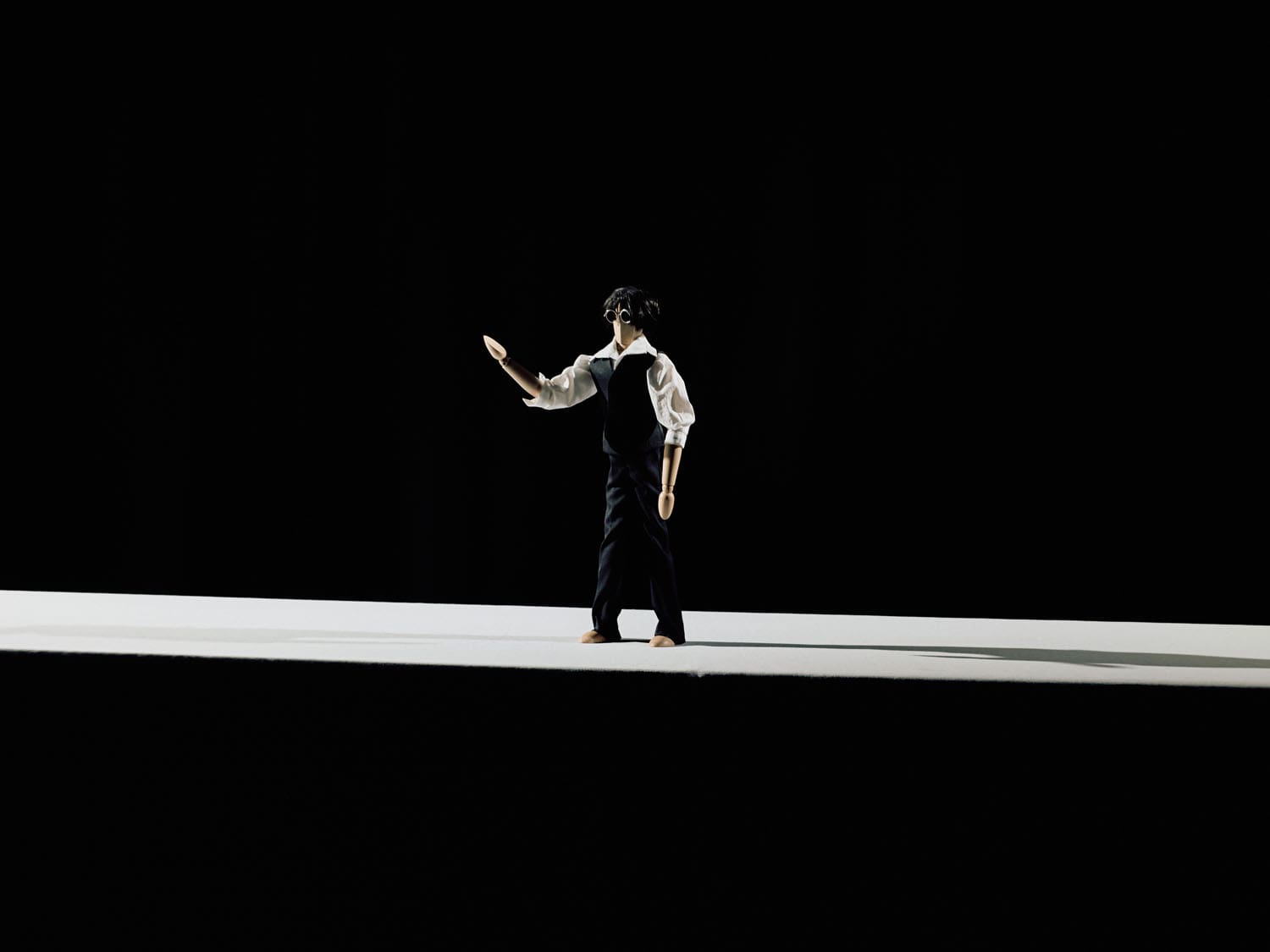
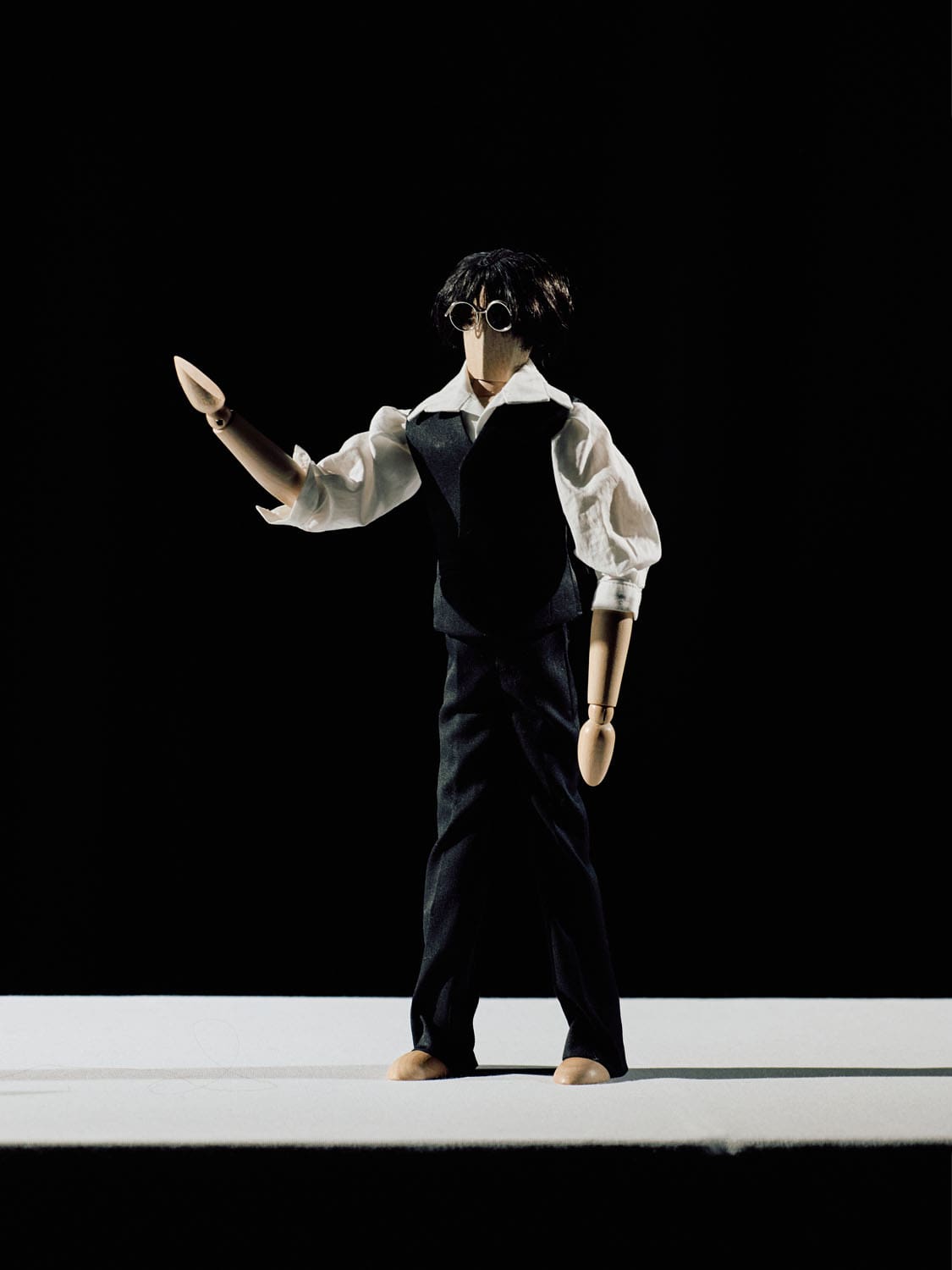
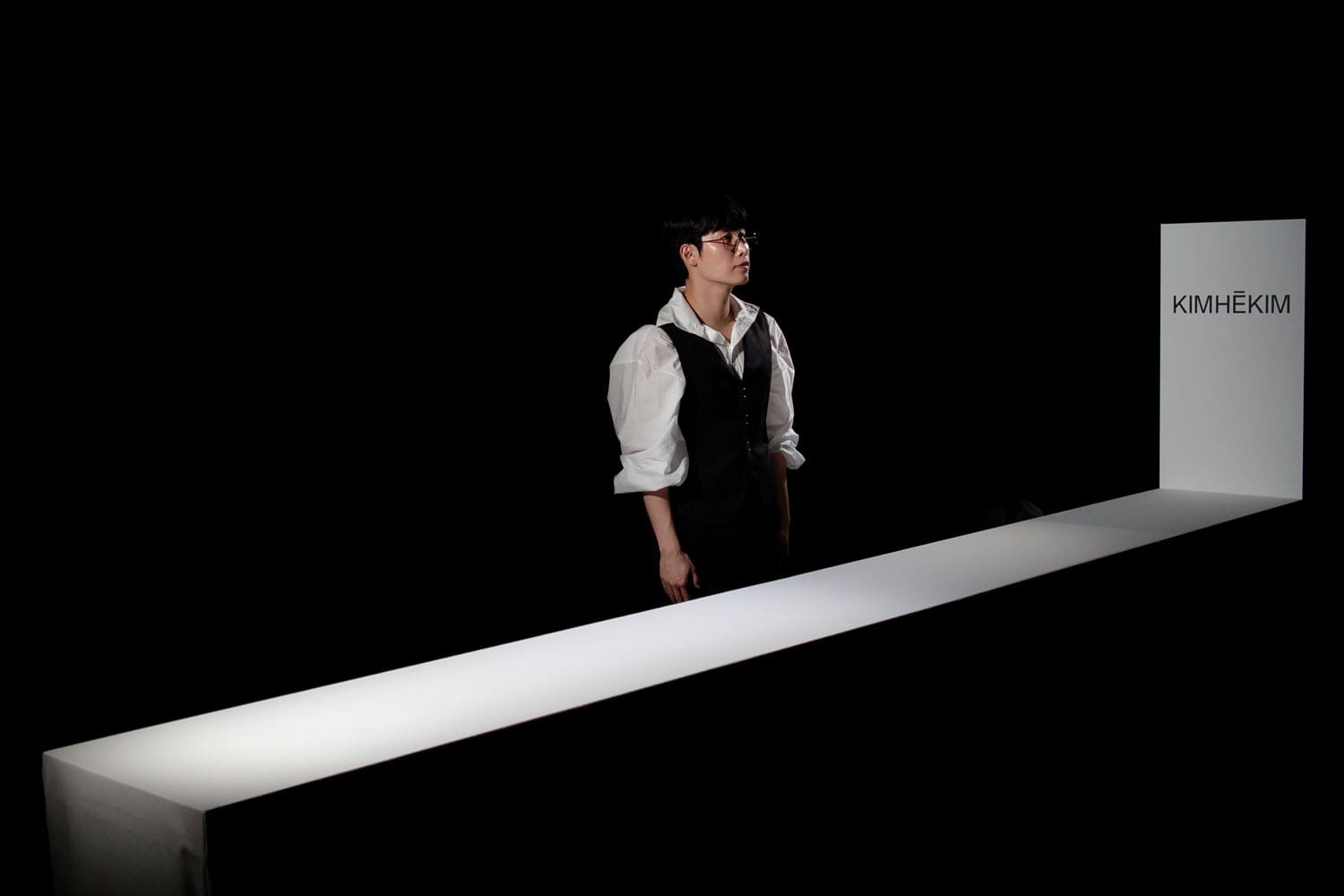
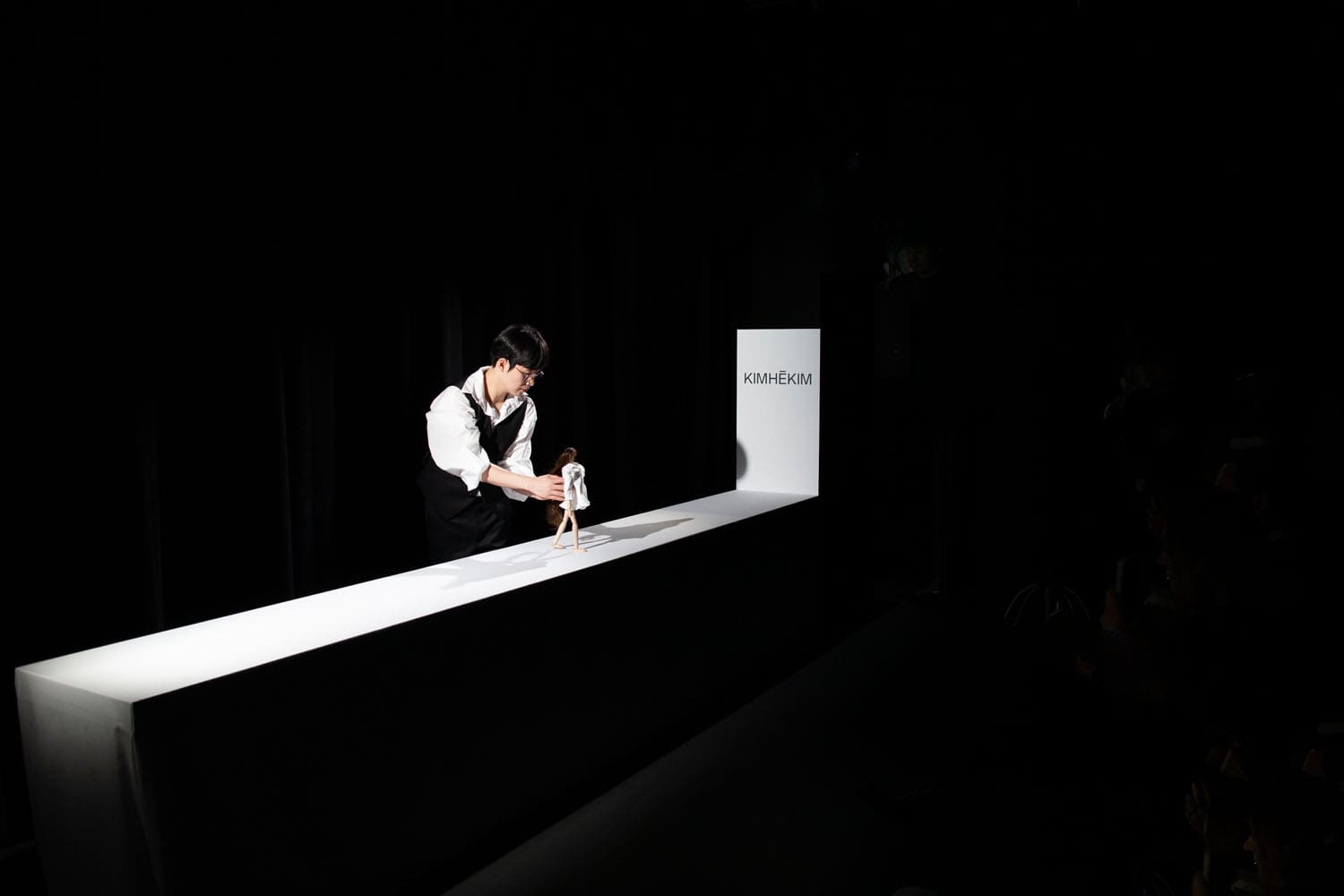
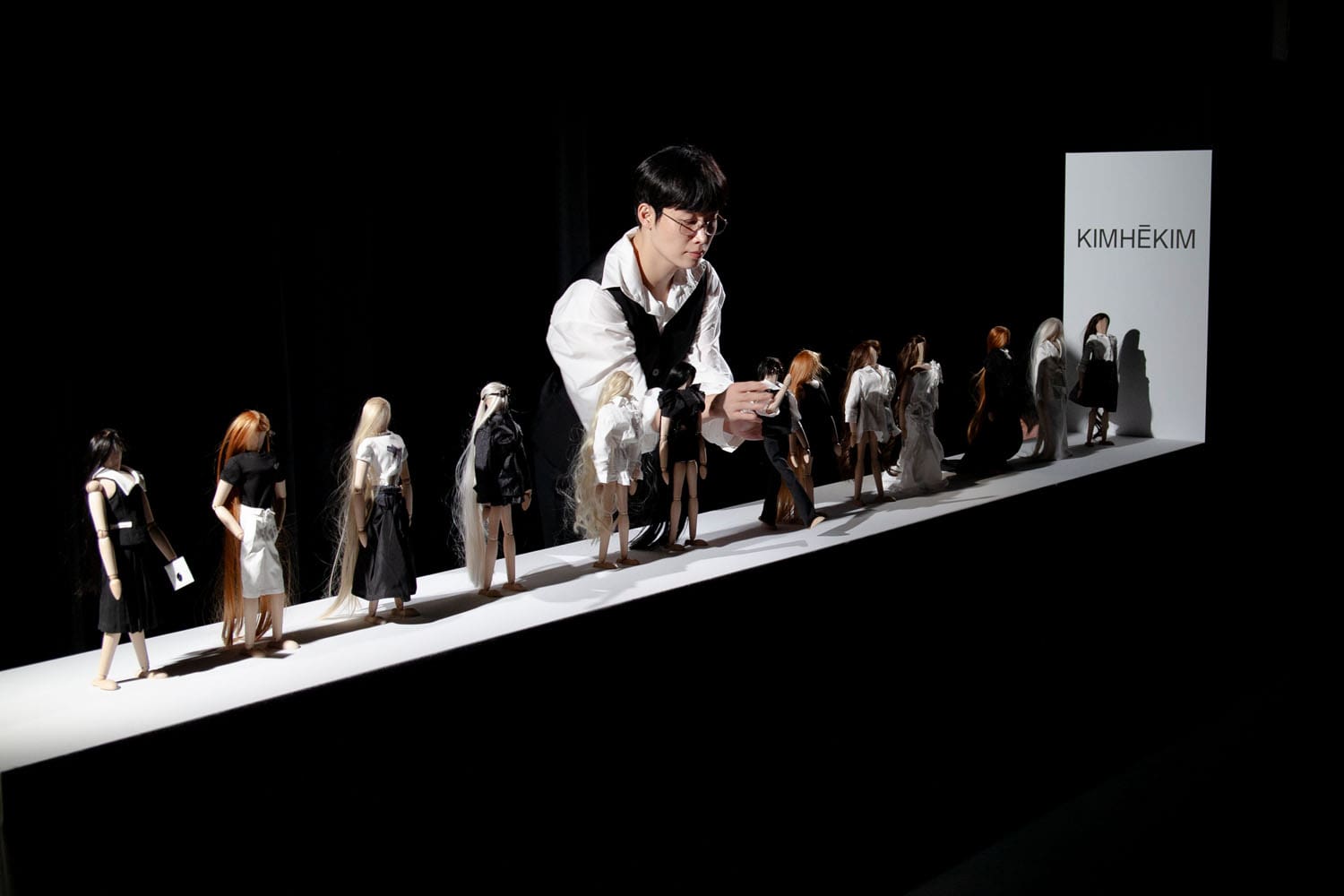
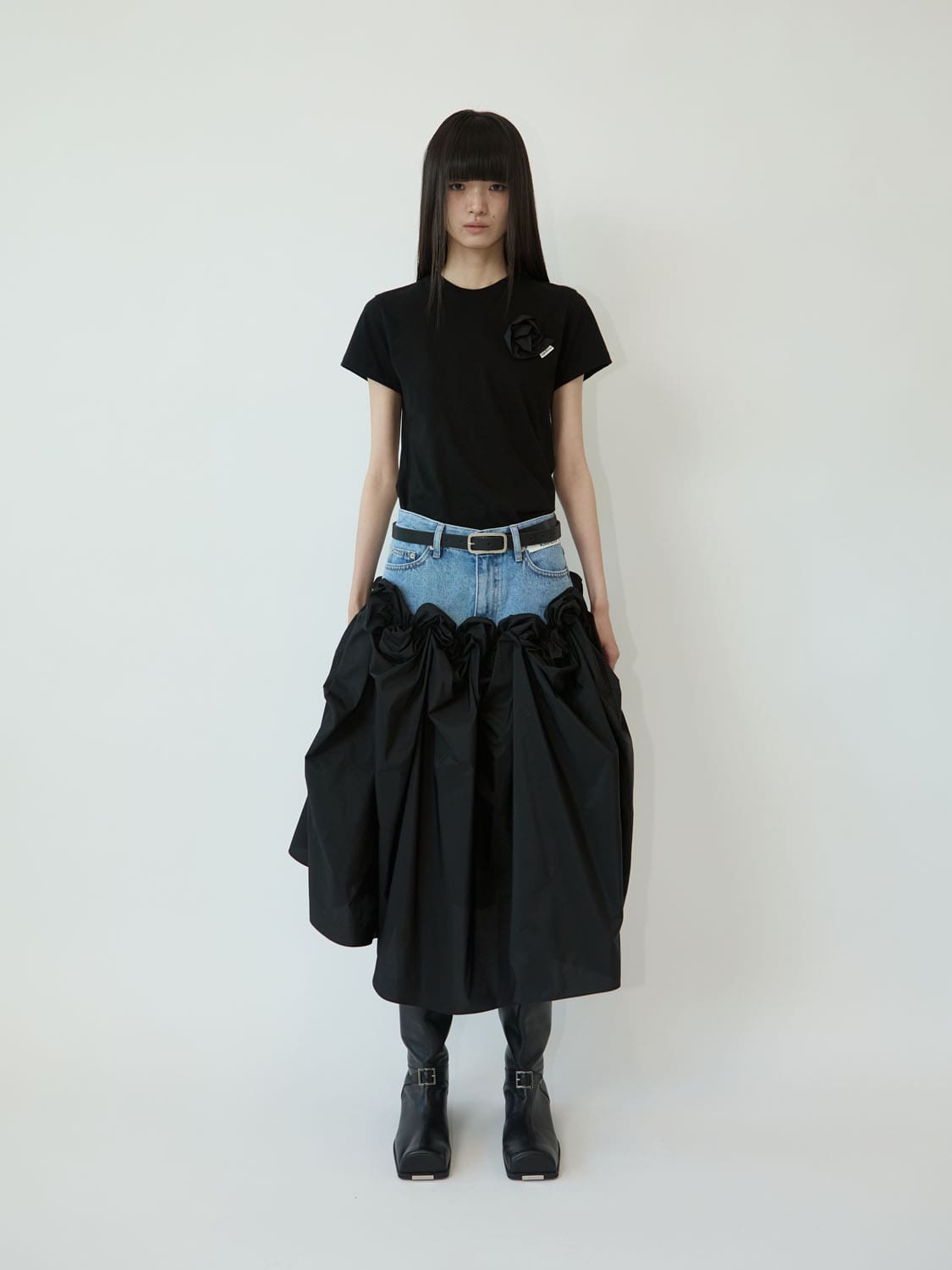
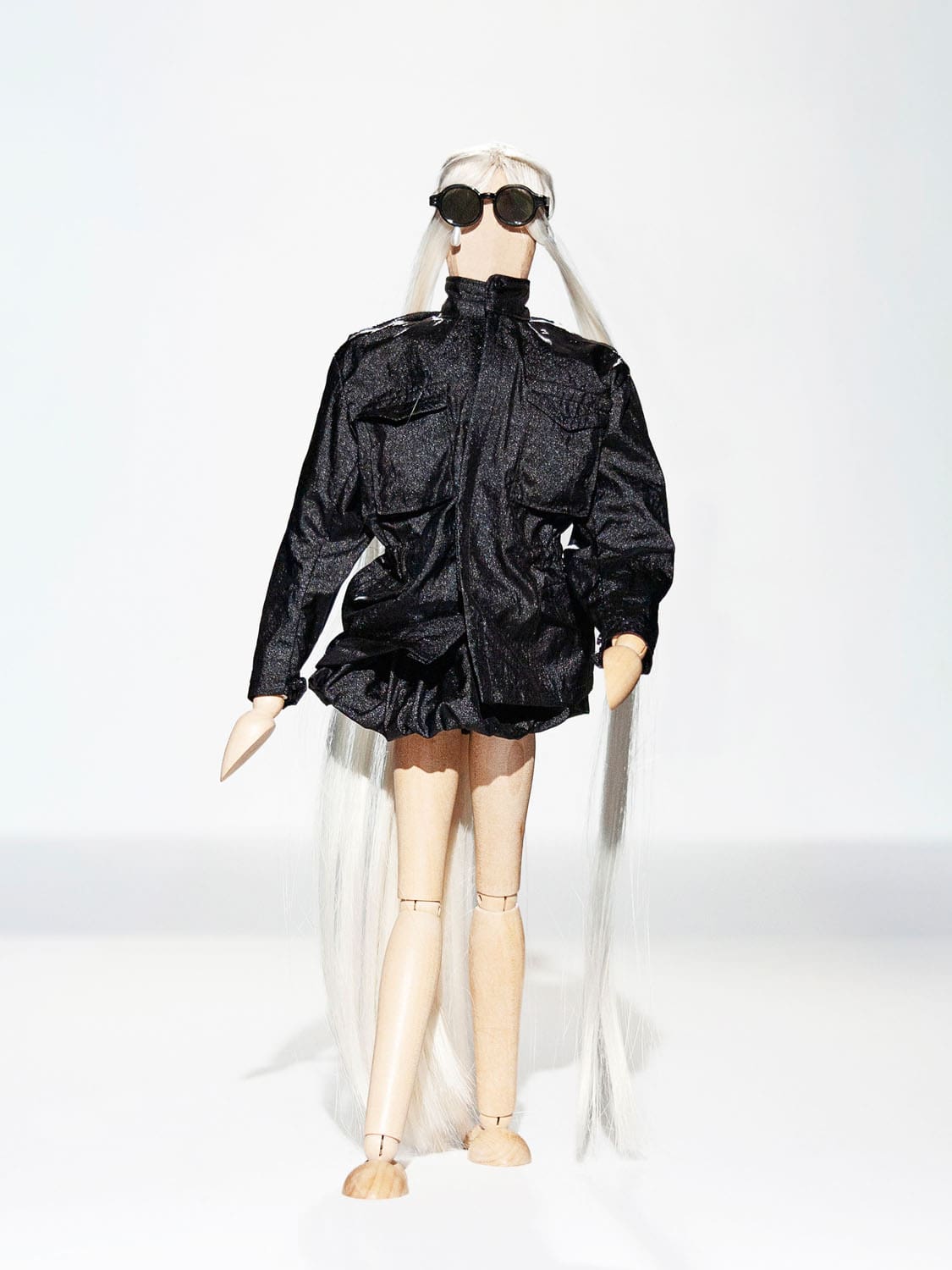
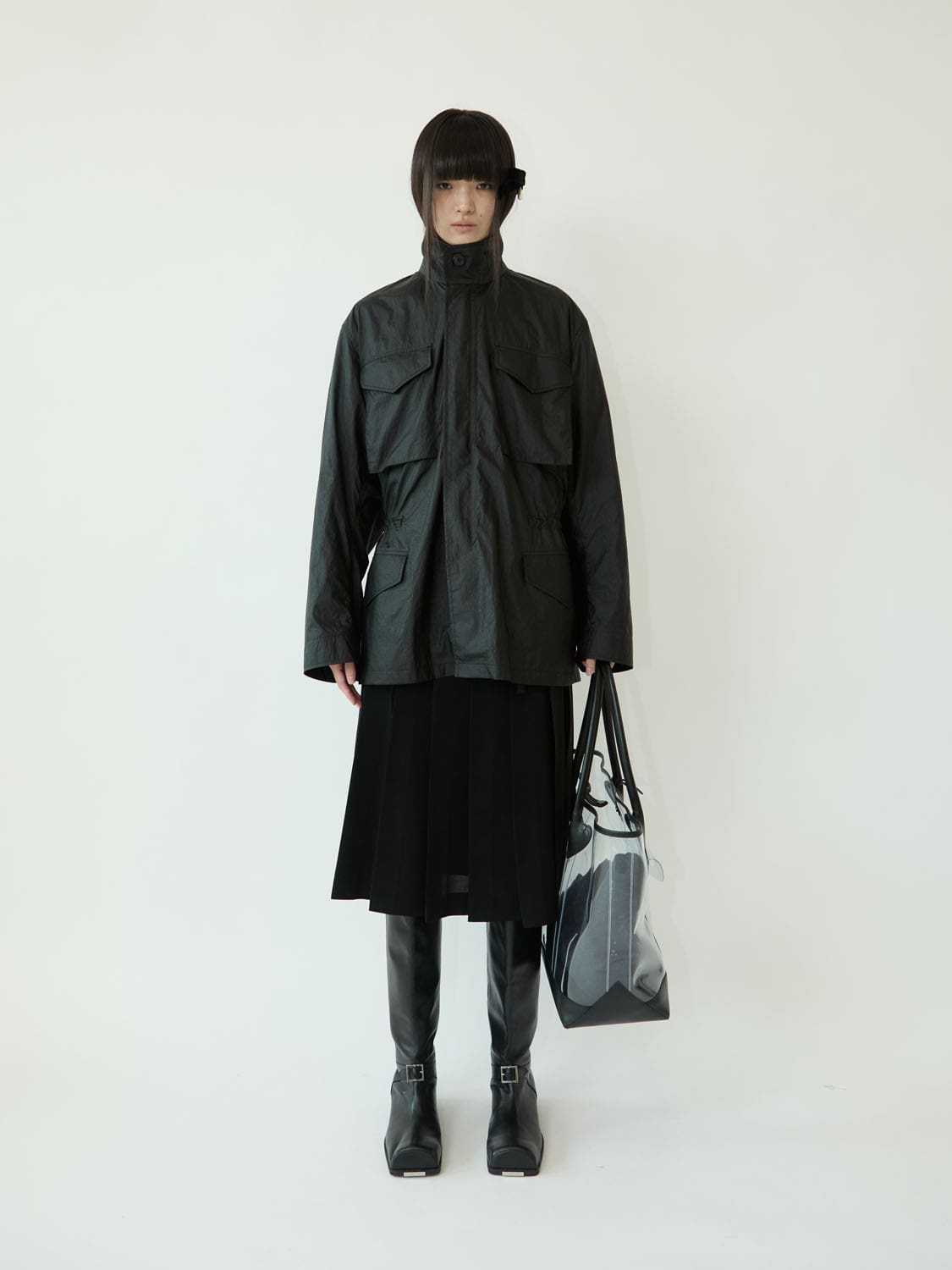
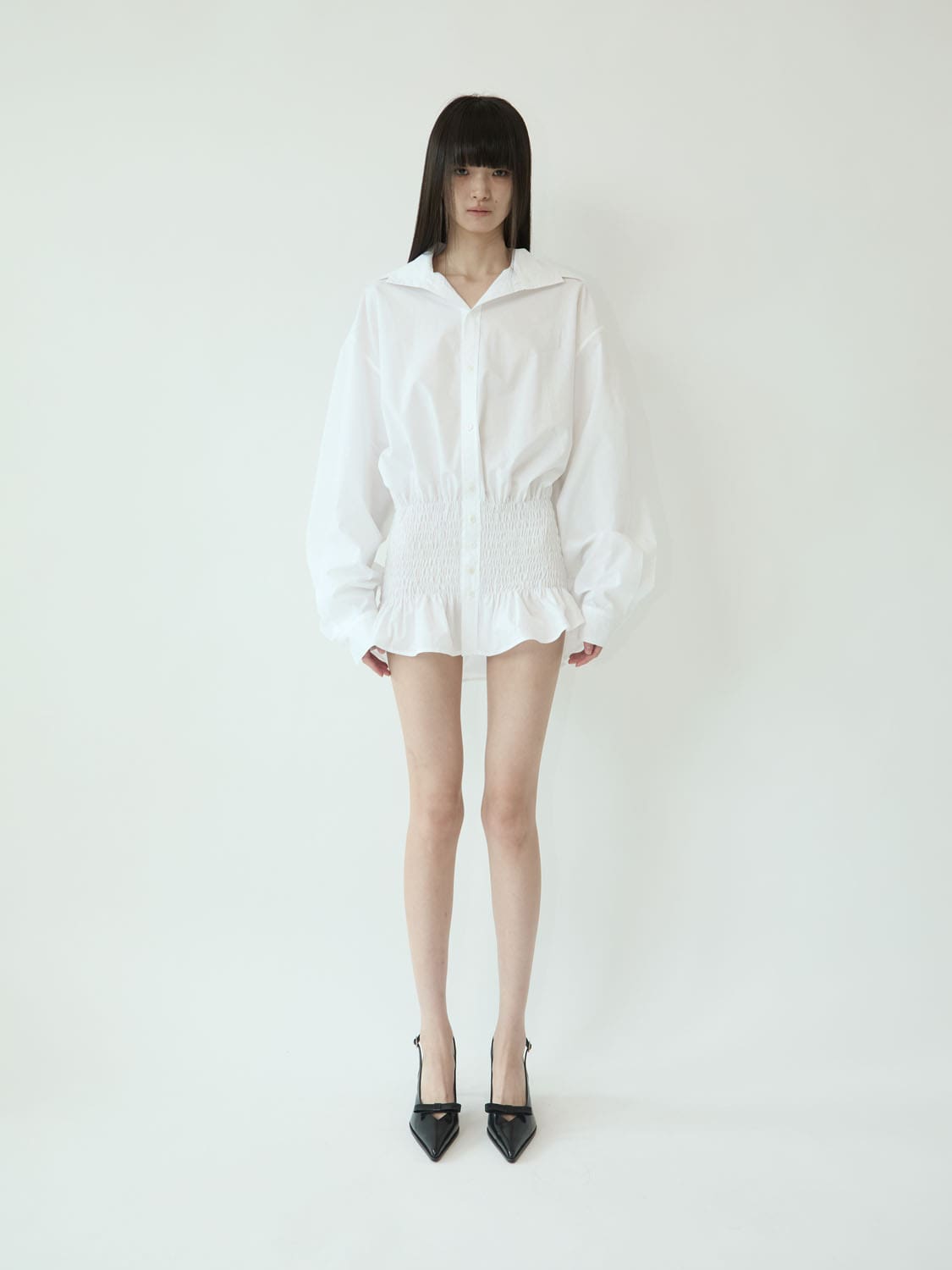
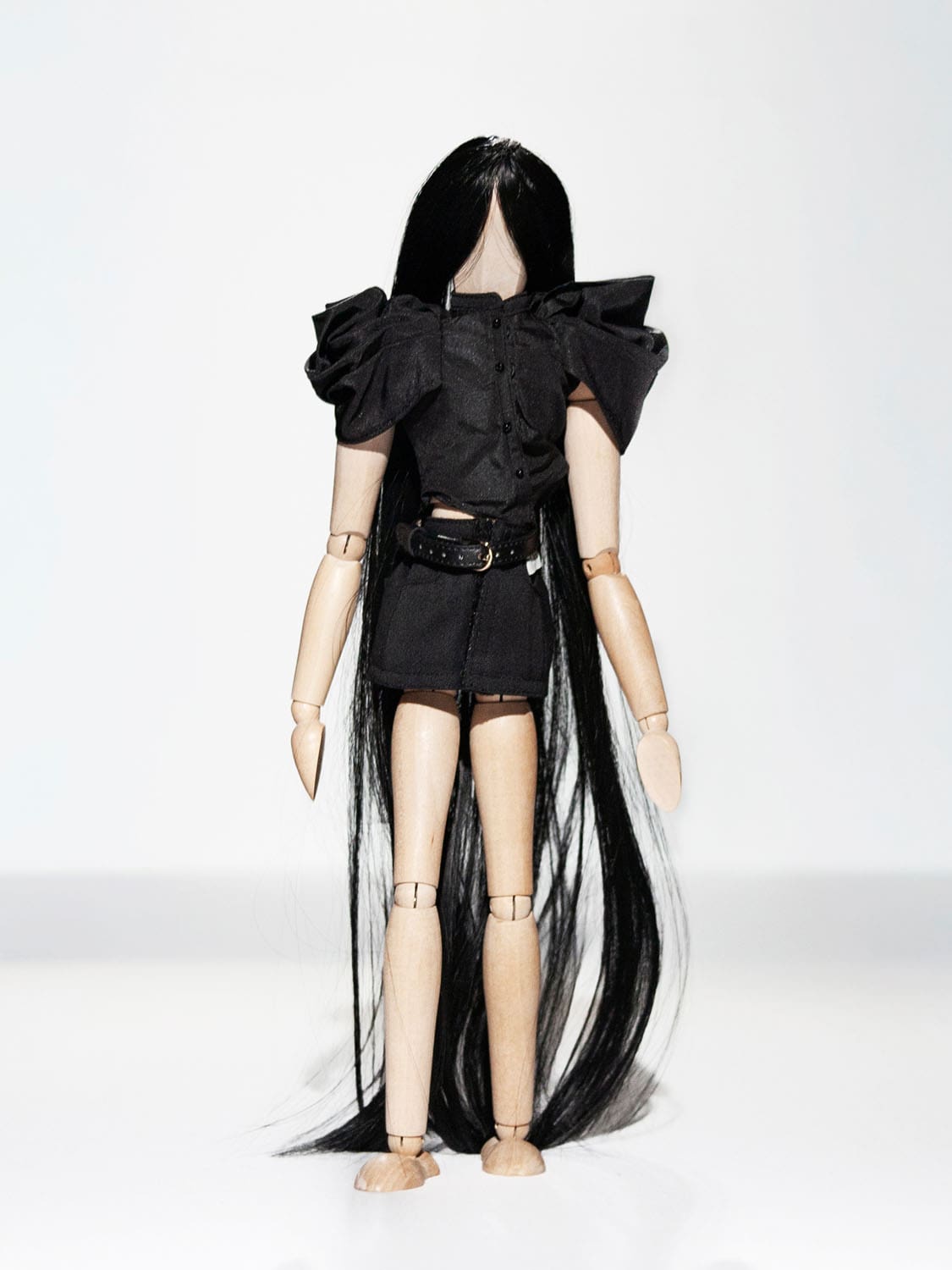
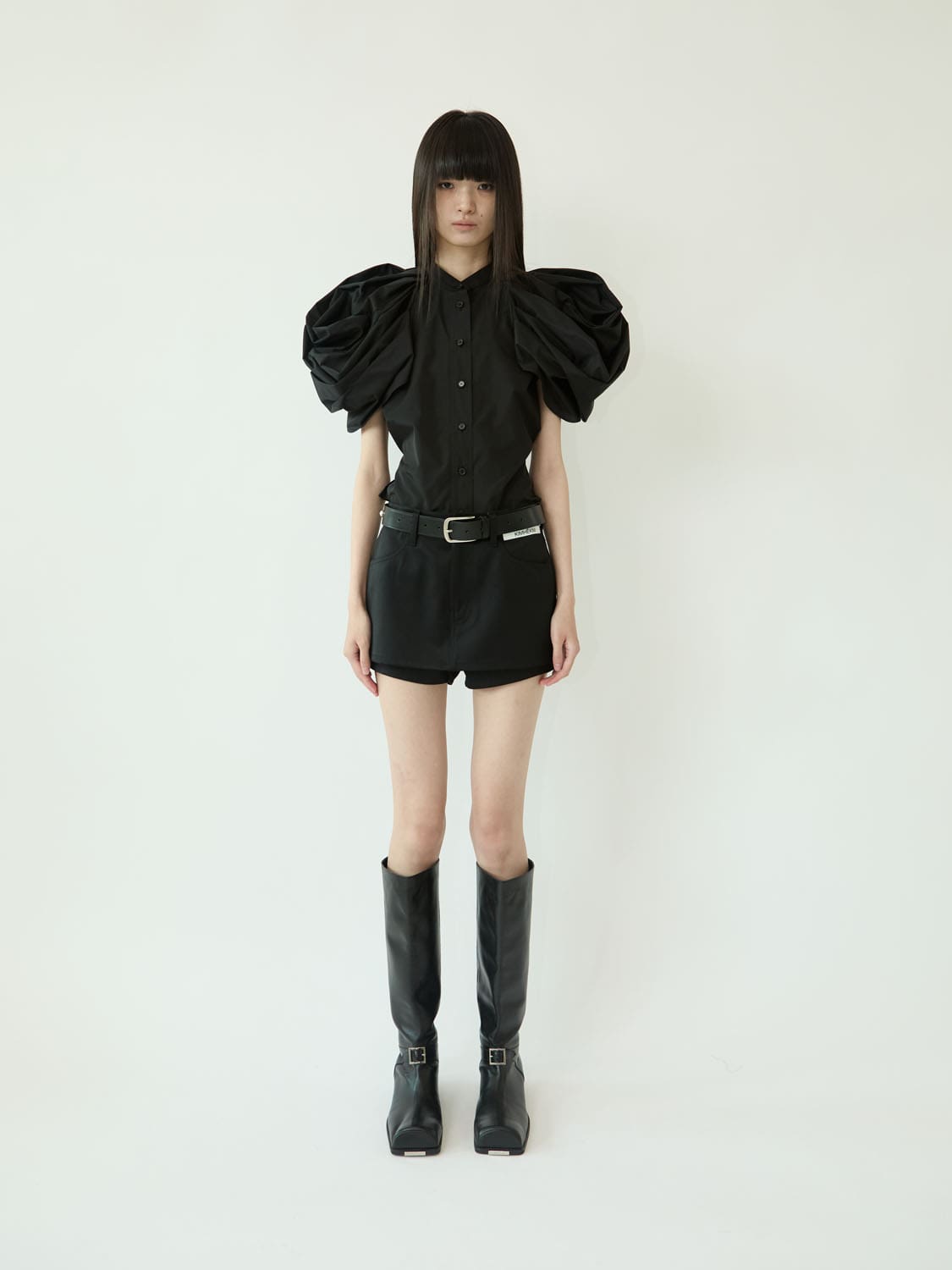
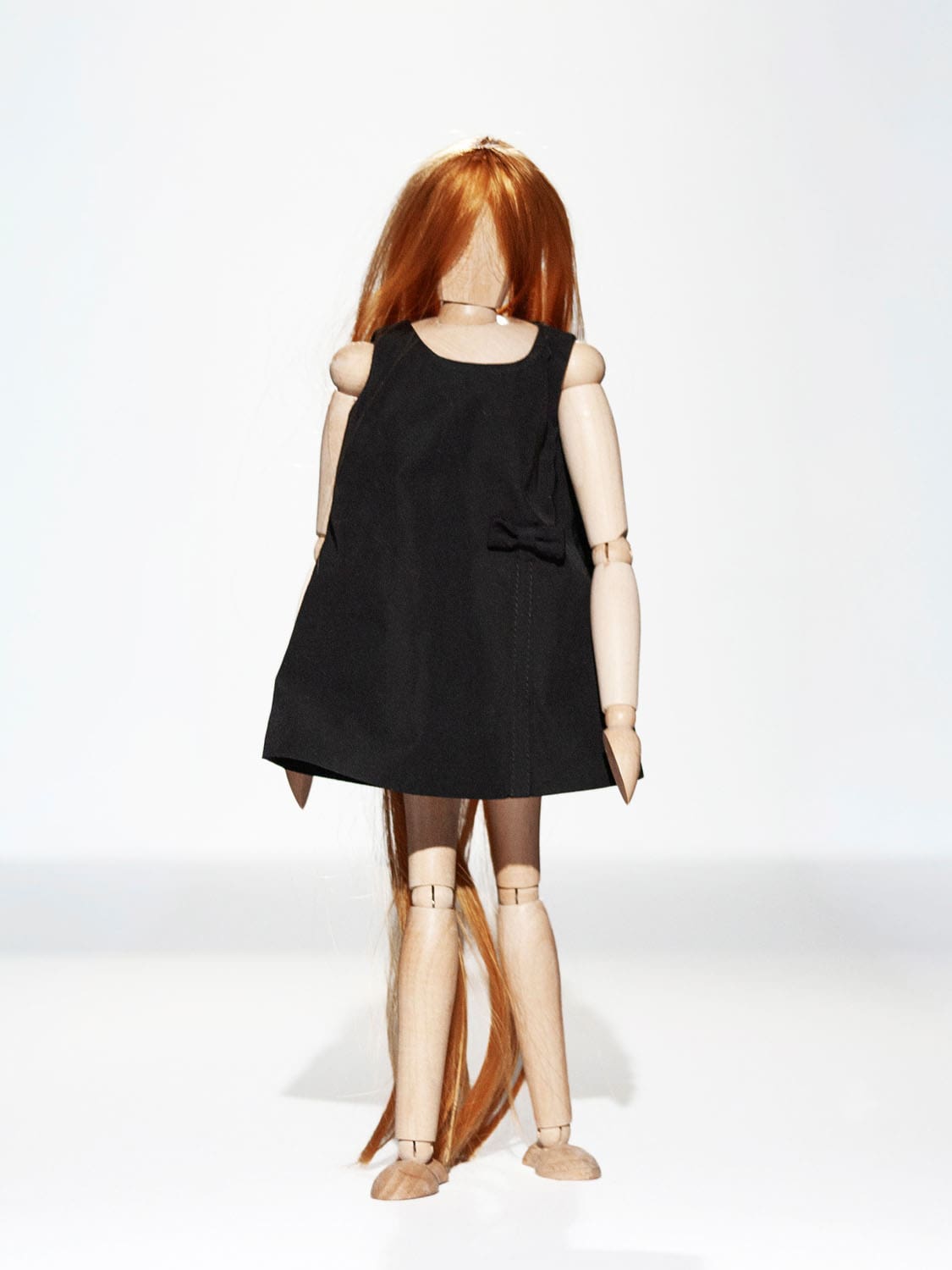
For Spring/Summer 2027, Seoul-born designer Kiminte Kimhēkim reawakens this lineage during Paris Fashion Week. Celebrating ten years of his eponymous house, Kiminte presents Little Wooden Dolls, a presentation split between miniature wooden mannequins and living human muses. By returning to his childhood instinct of dressing dolls, Kiminte bypasses fashion’s endless noise to offer an intimate meditation on scale, innocence, and craft.
Kimhekim Spring Summer 2027 Miniature Runway
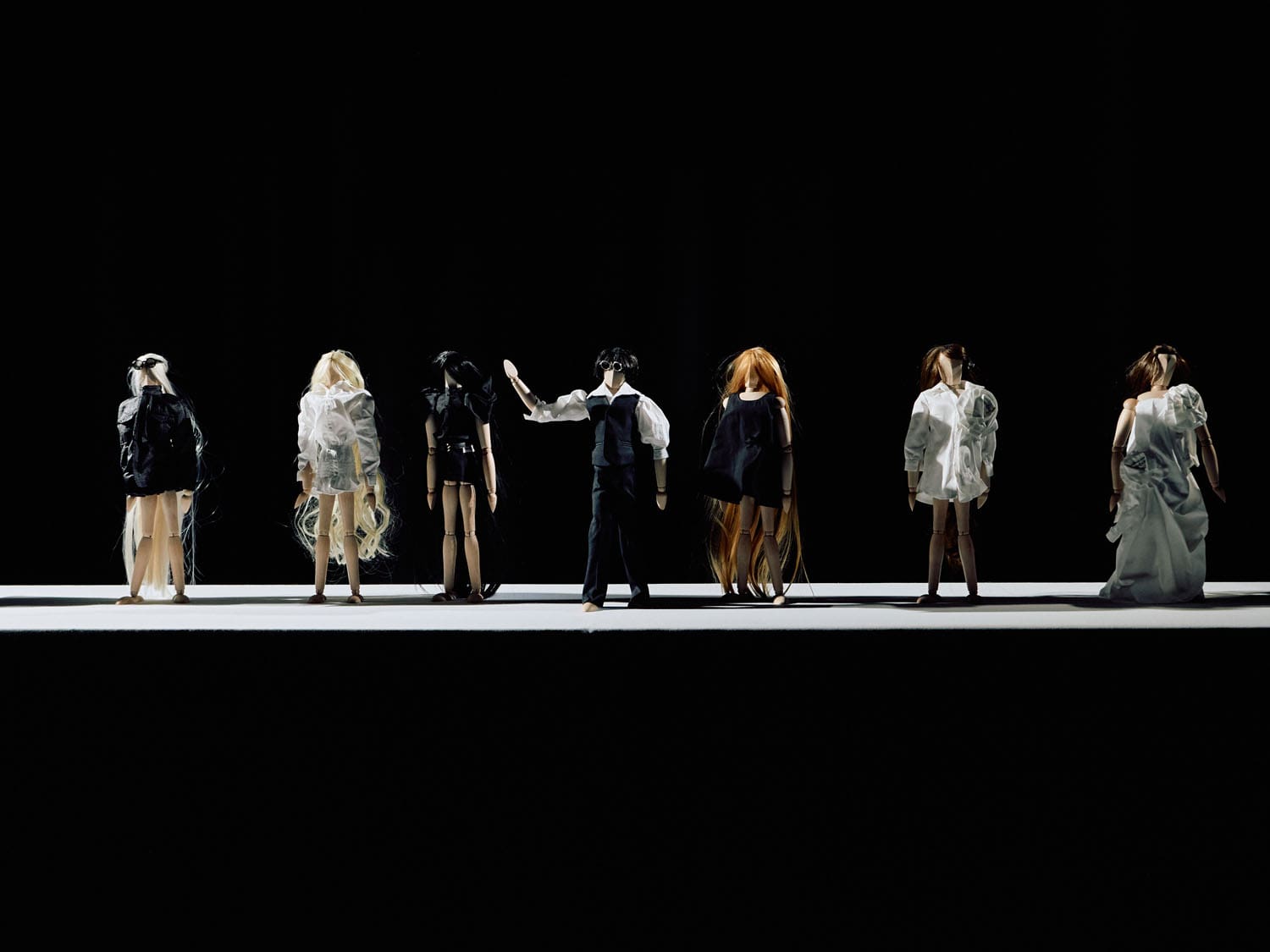
The Wooden Double and the Living Form
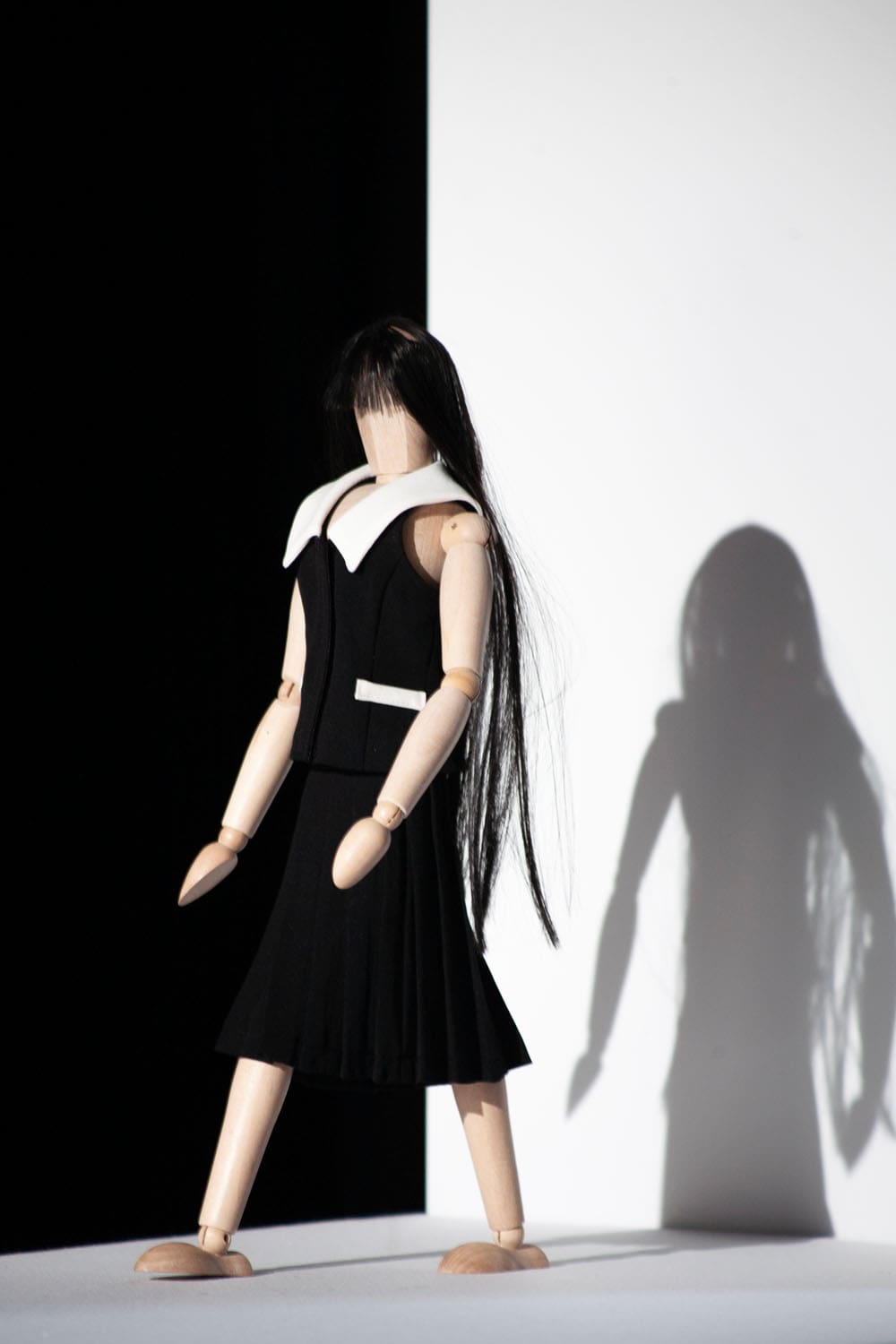
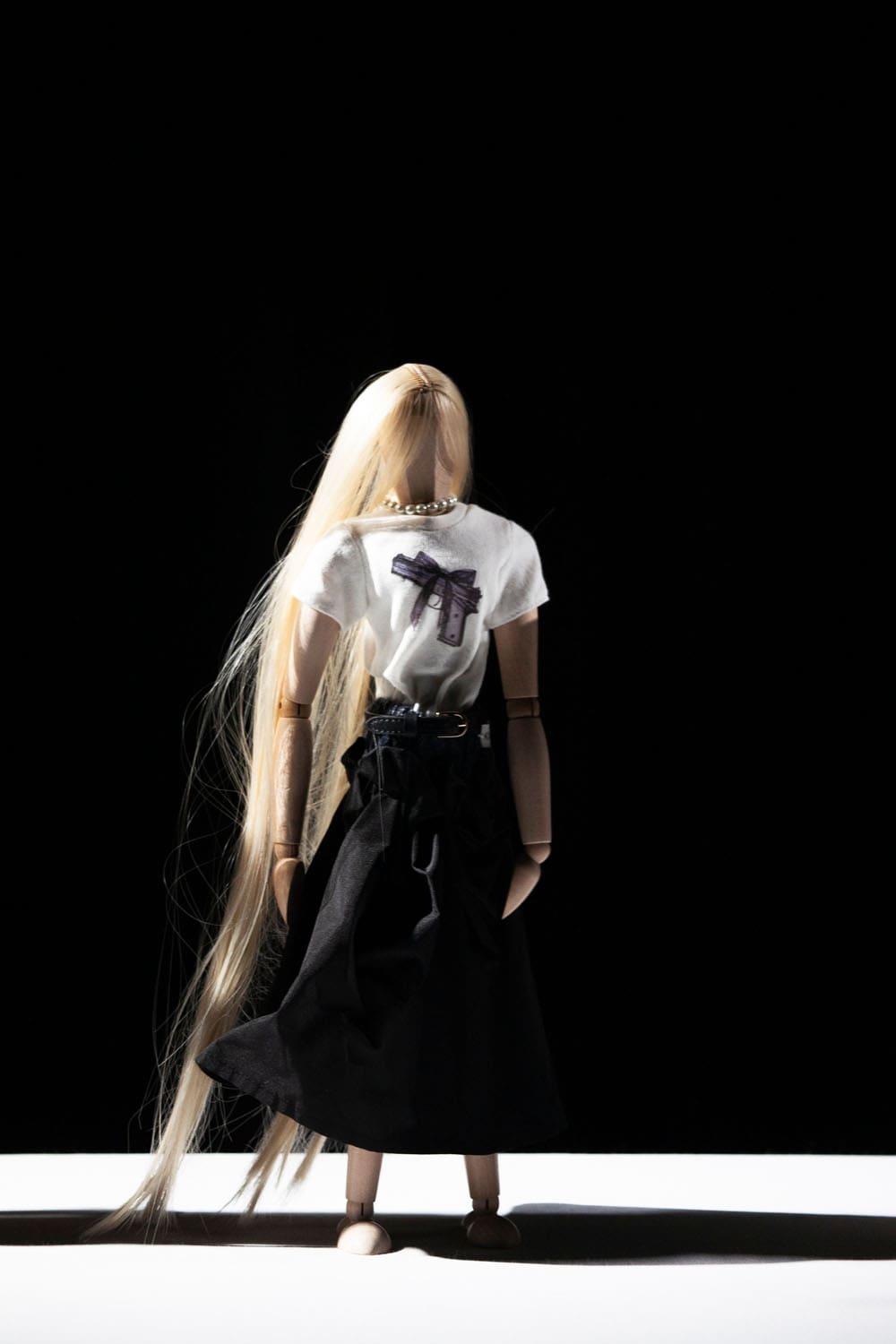
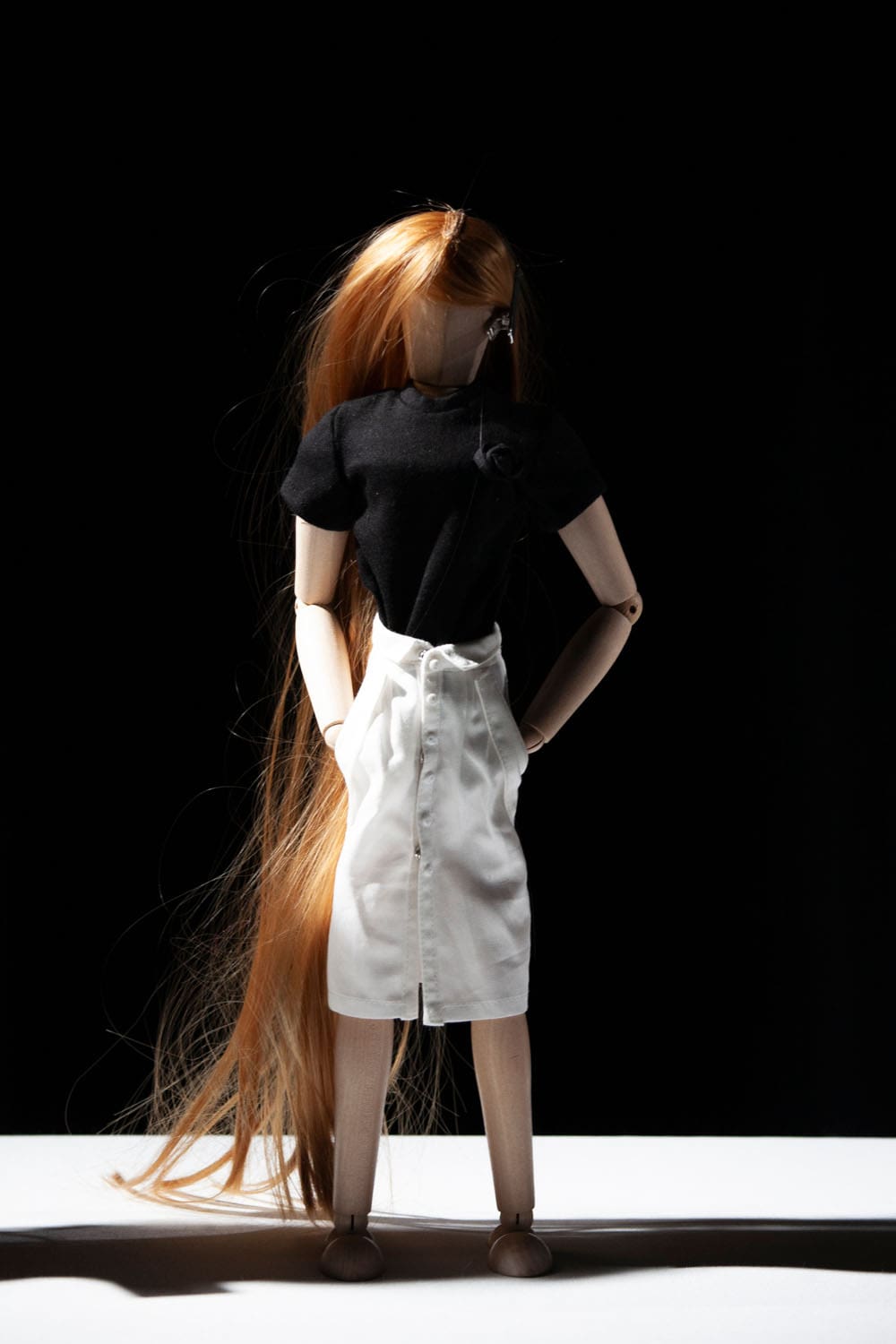
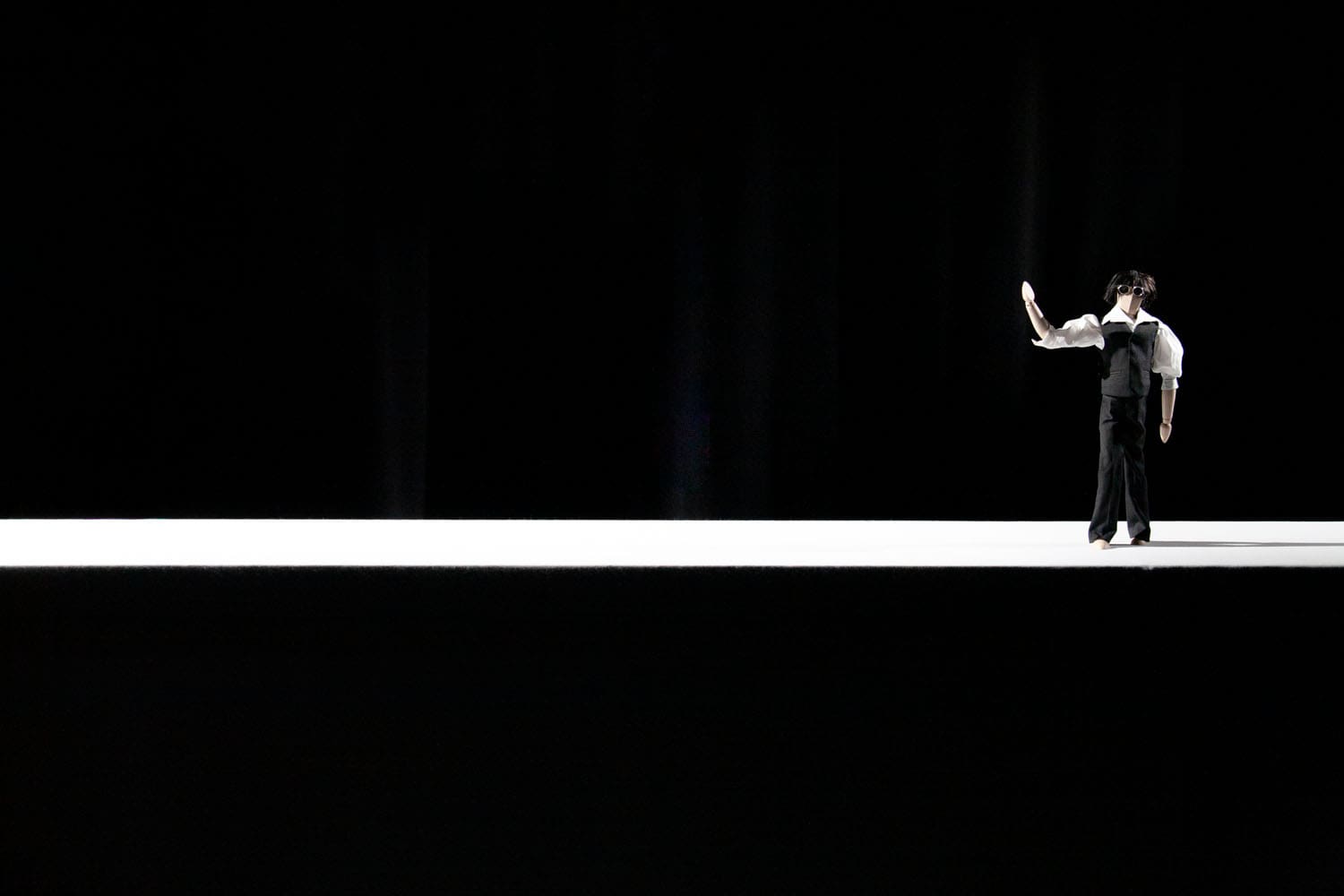
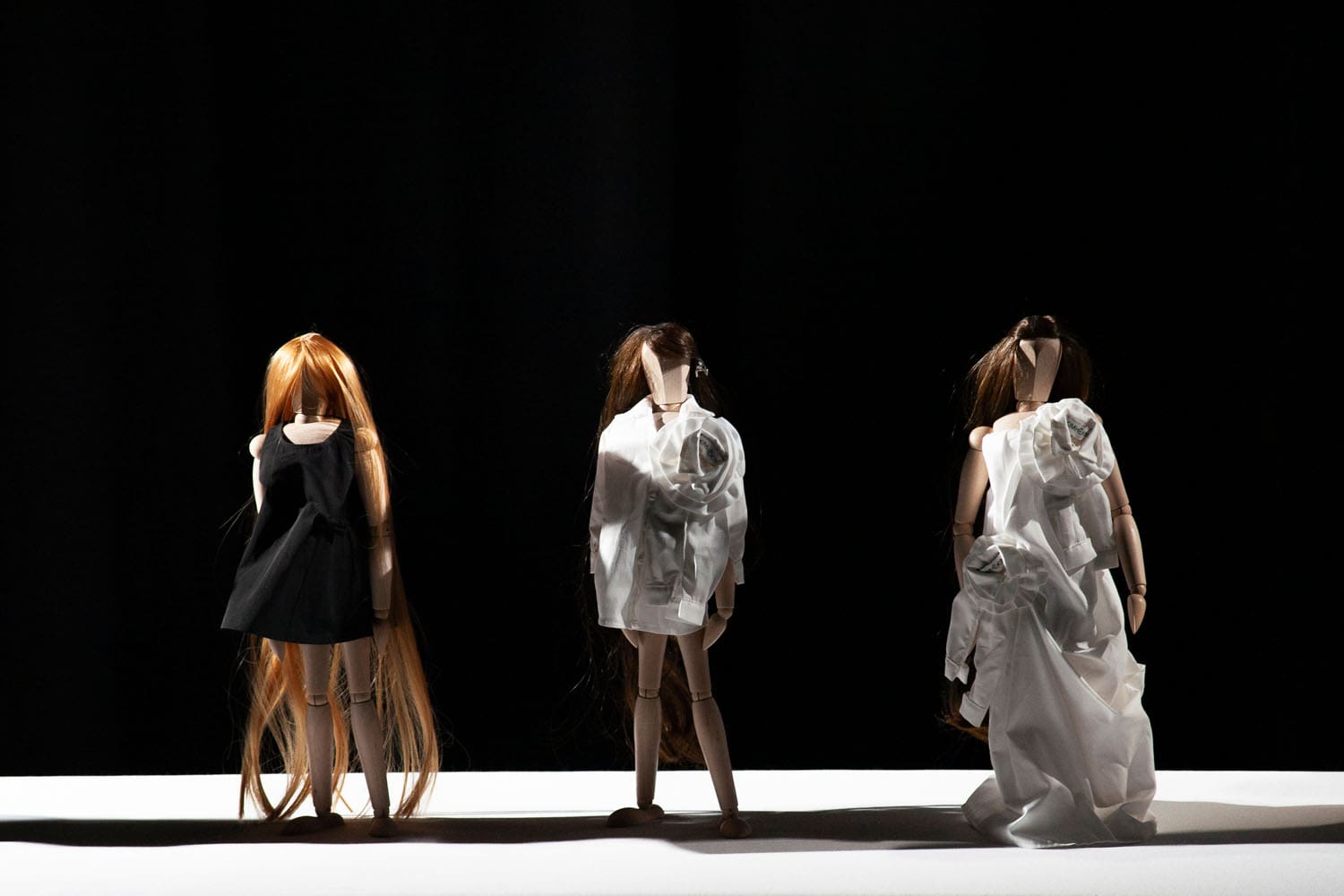
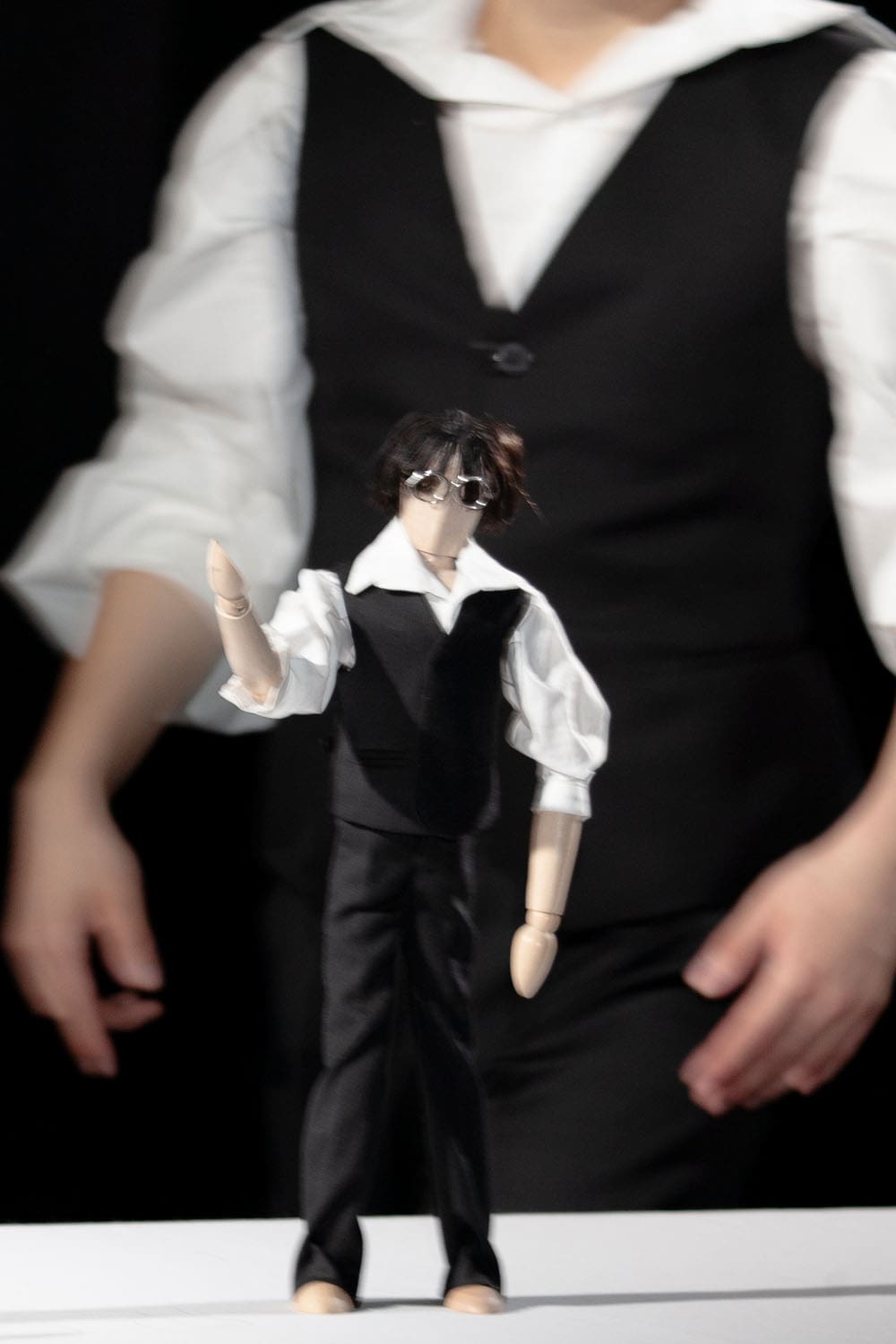
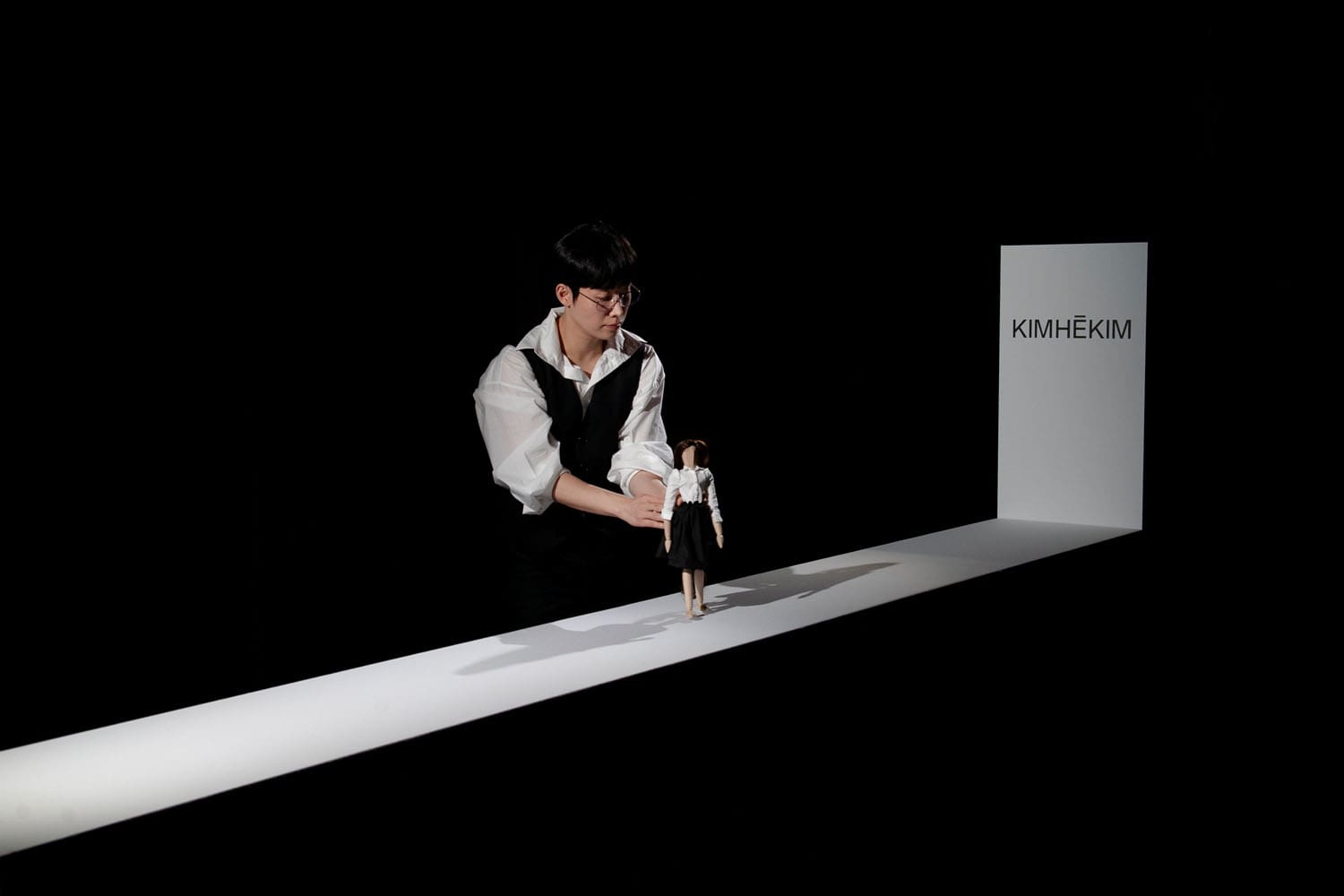
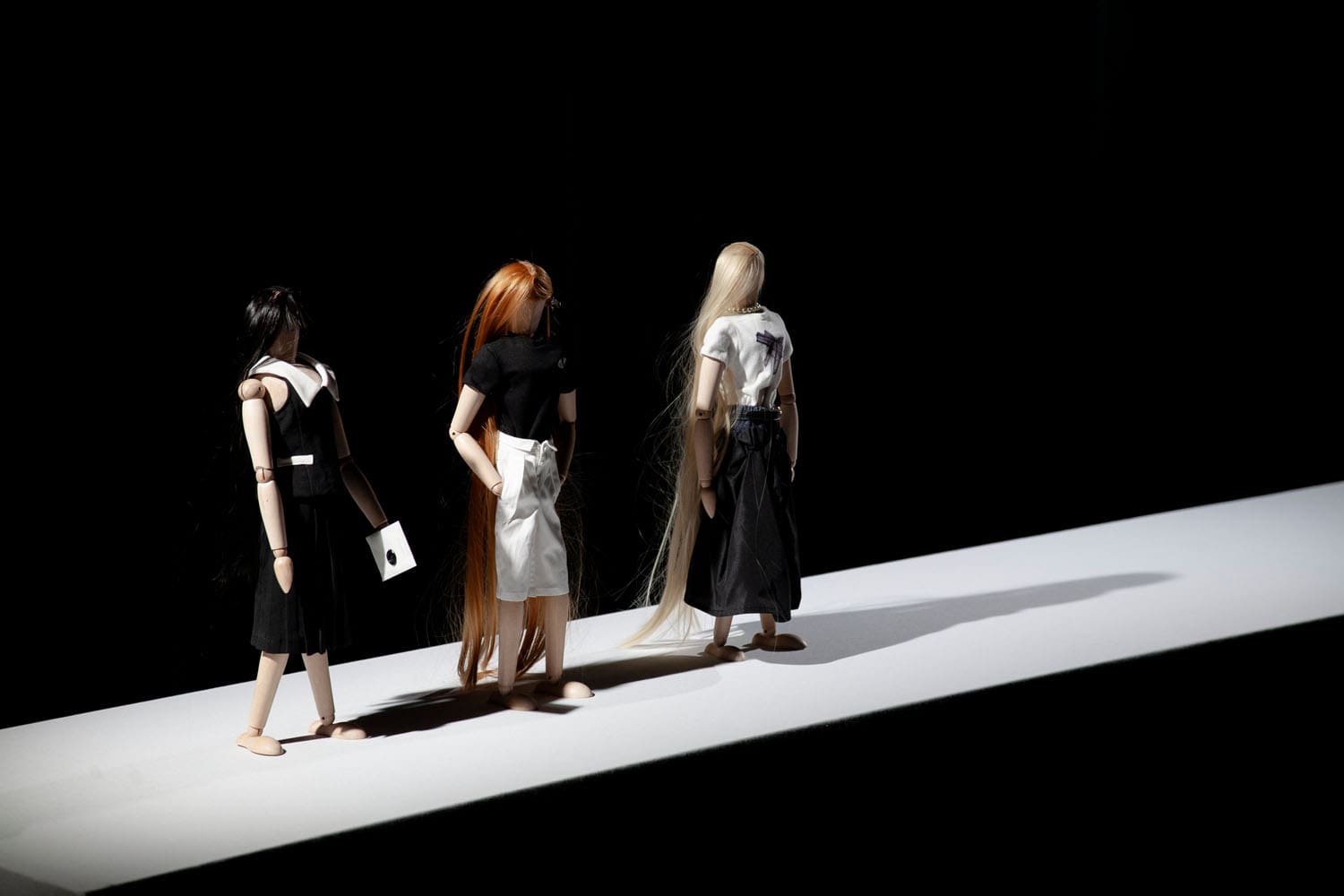
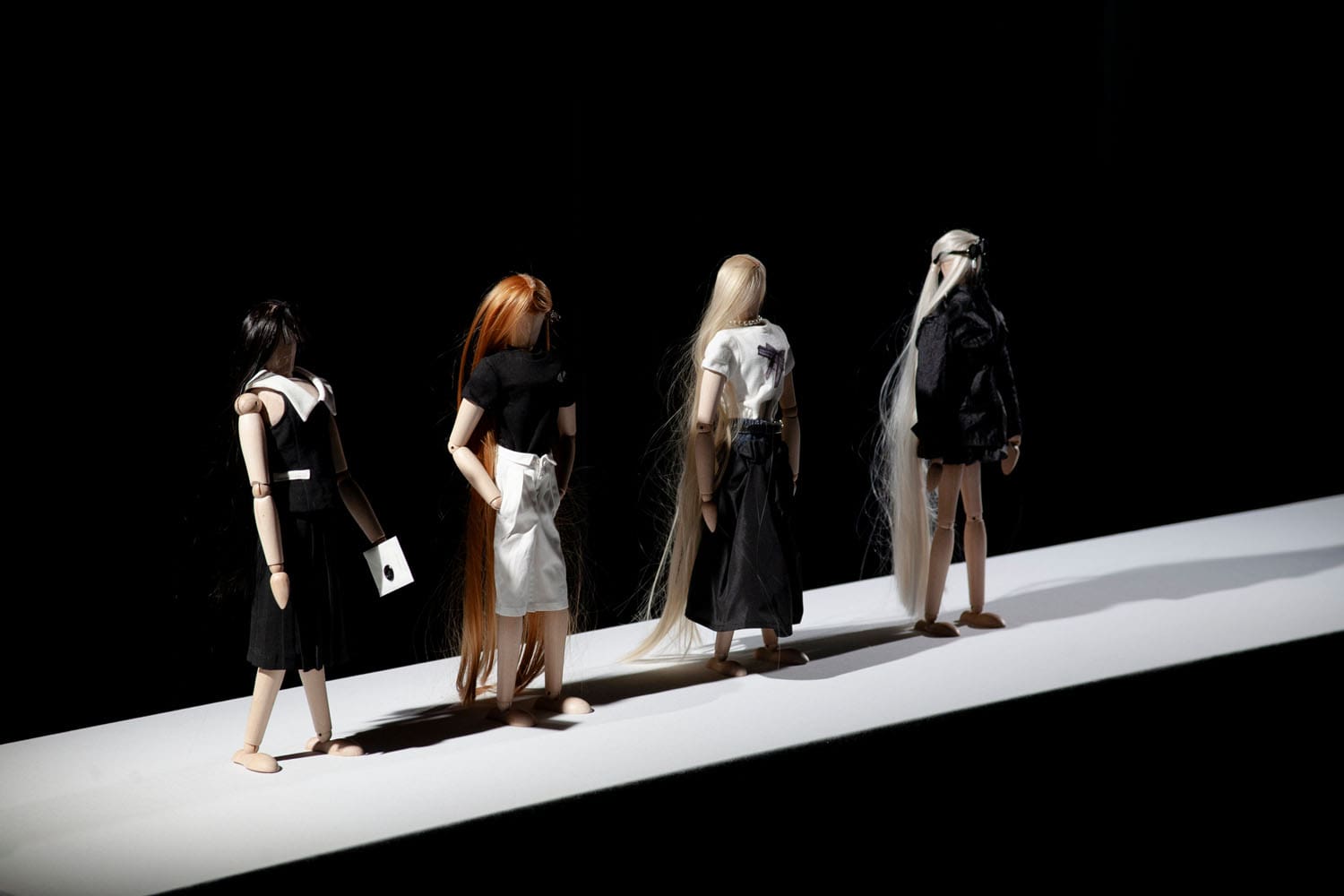
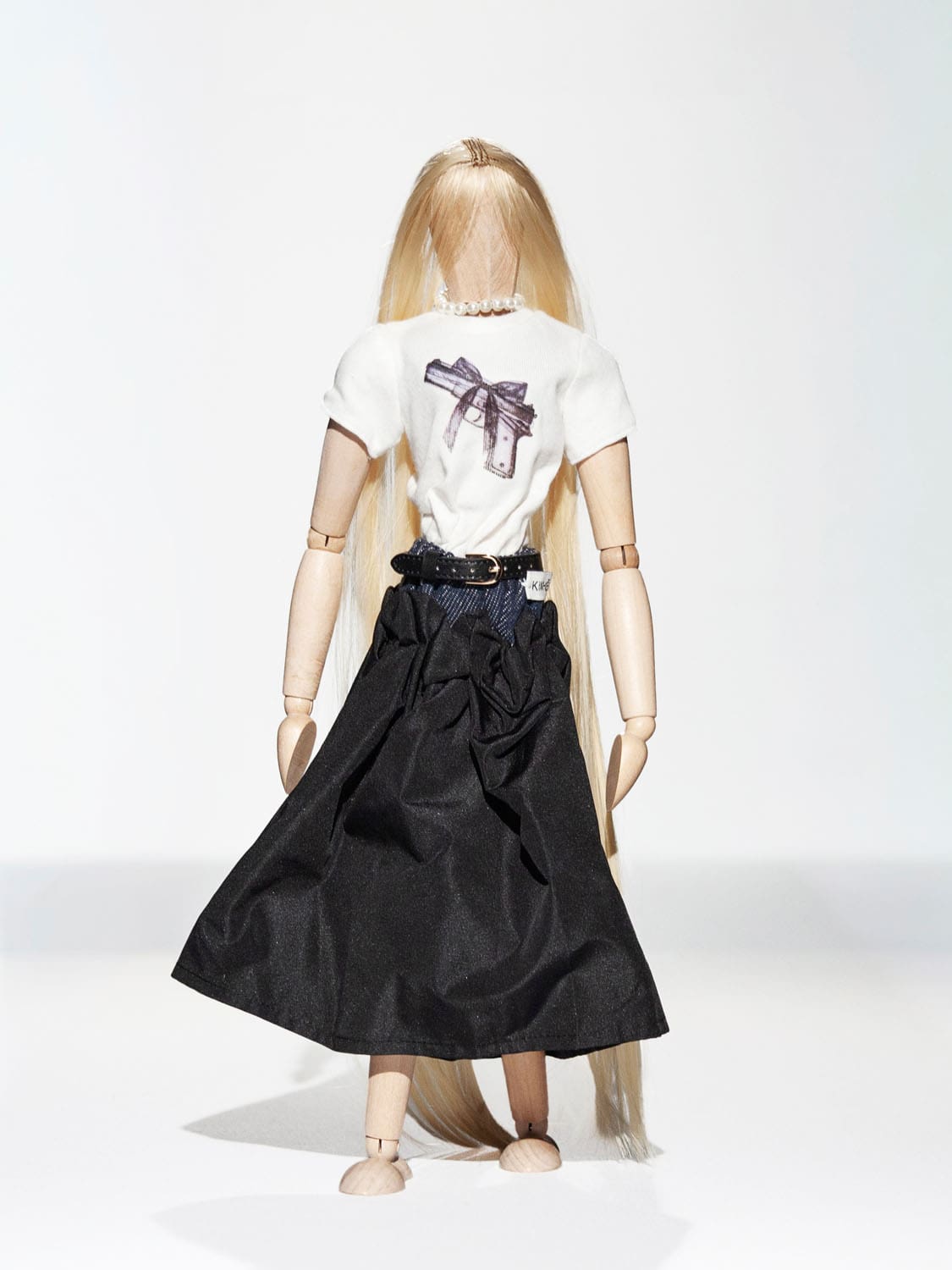
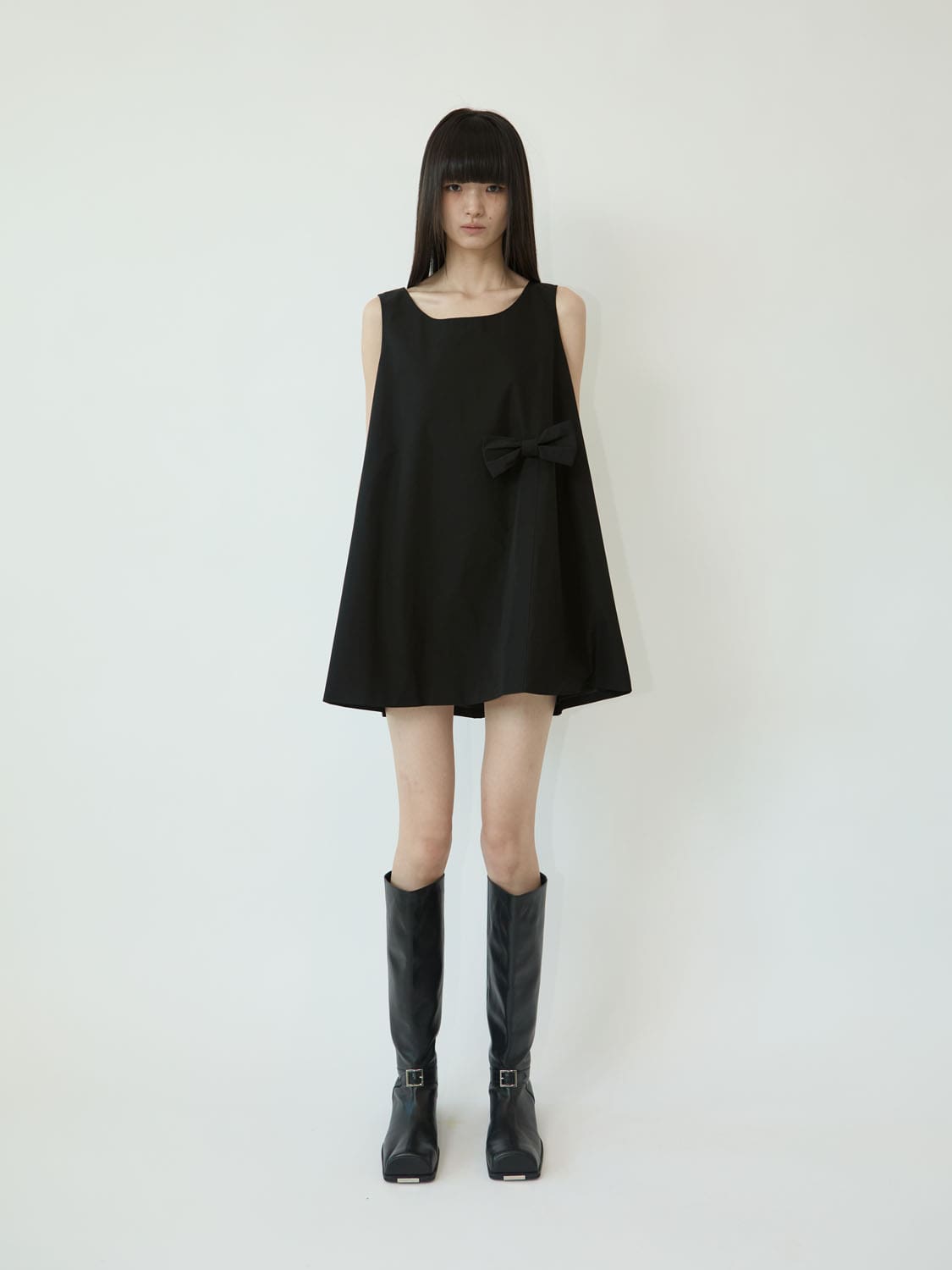
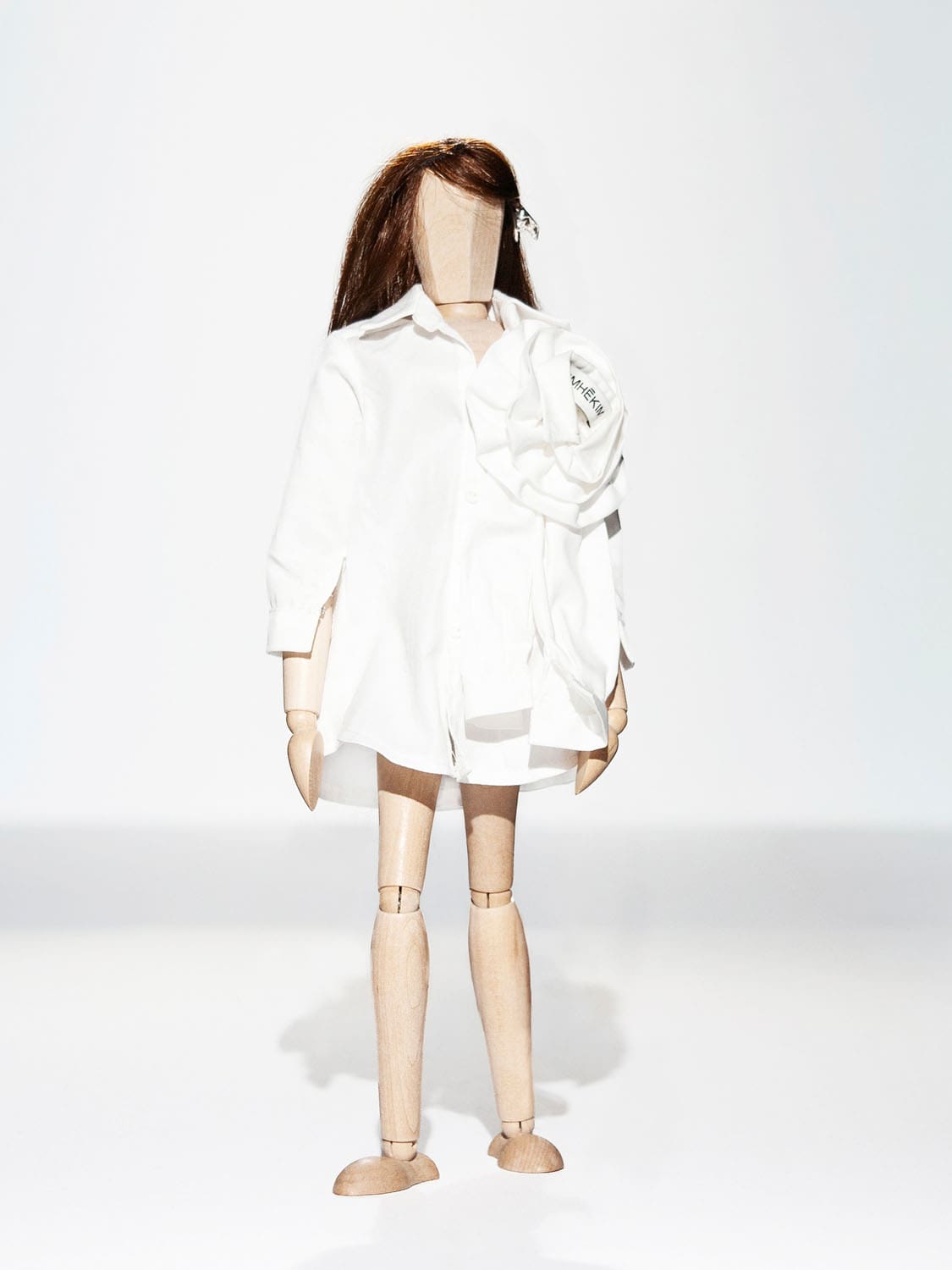
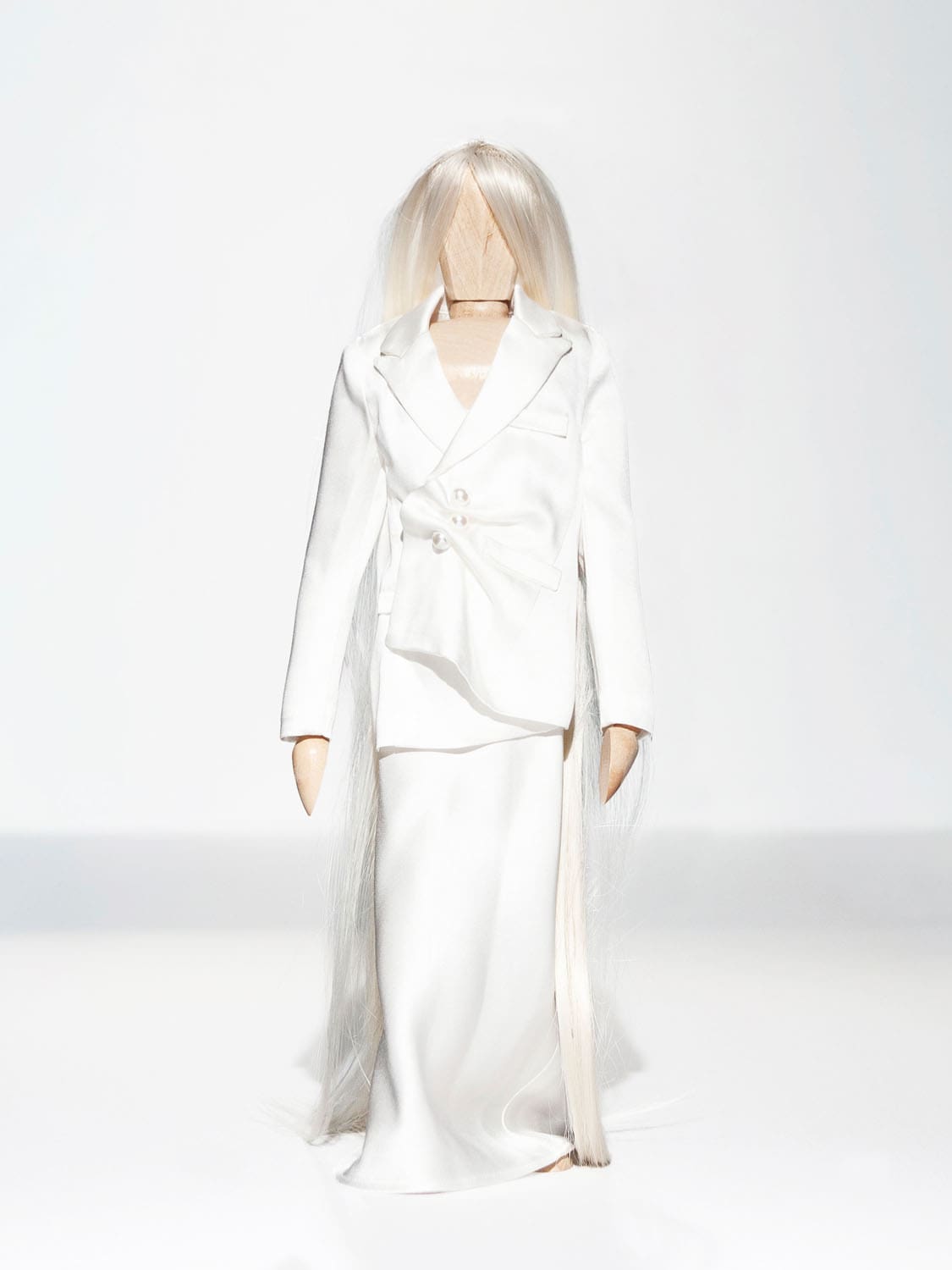
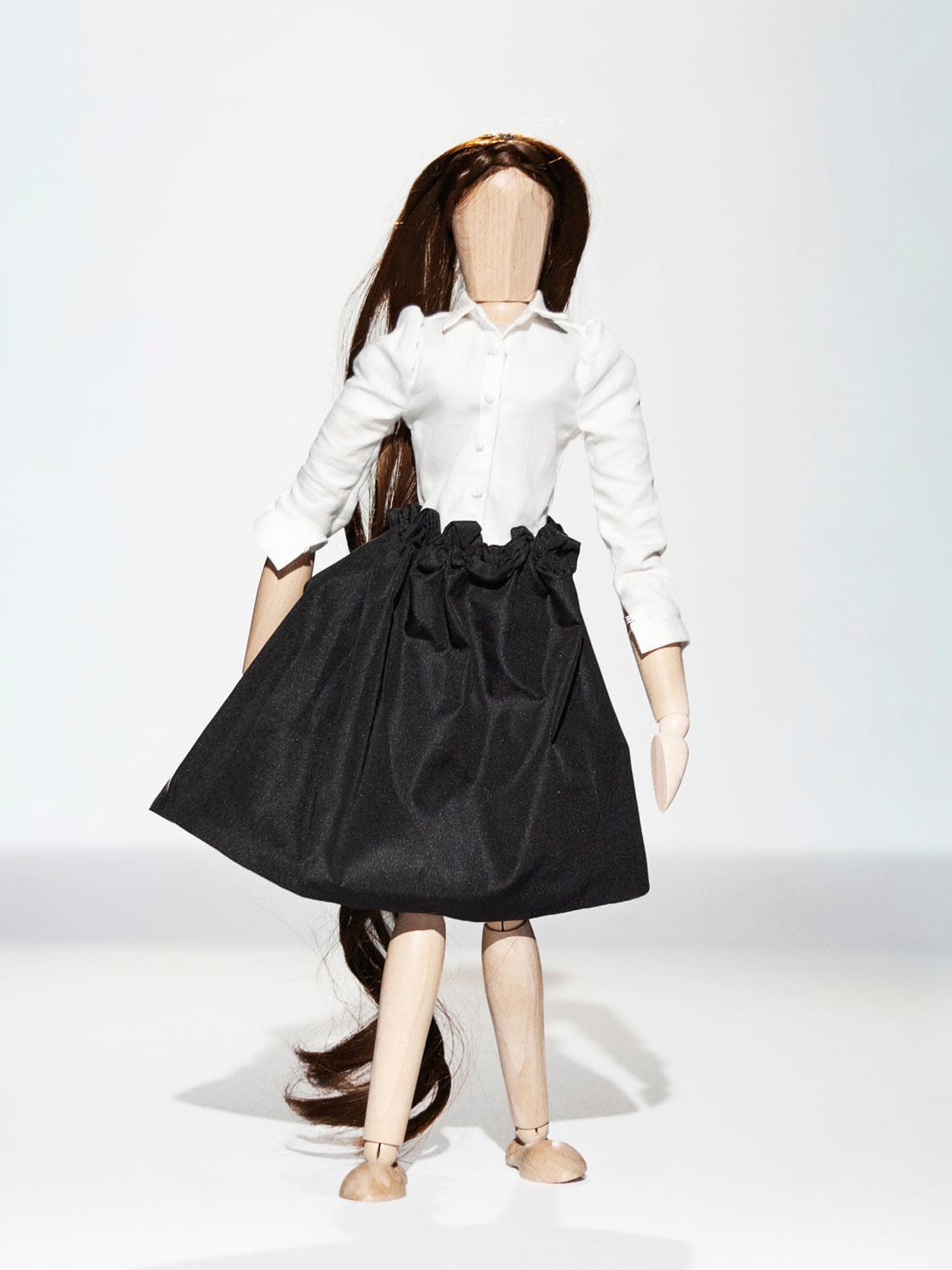
The presentation established a poetic dualism: every silhouette was sculpted in duplicate, existing simultaneously as a delicate miniature worn by an articulated wooden figure and as an architectural garment worn by a living human model. This mirrored staging removed the arrogance of modern runway theater. Kiminte dressed and positioned each doll by hand, laying bare the tactile creative gesture behind each stitch before letting it breathe on human limbs.
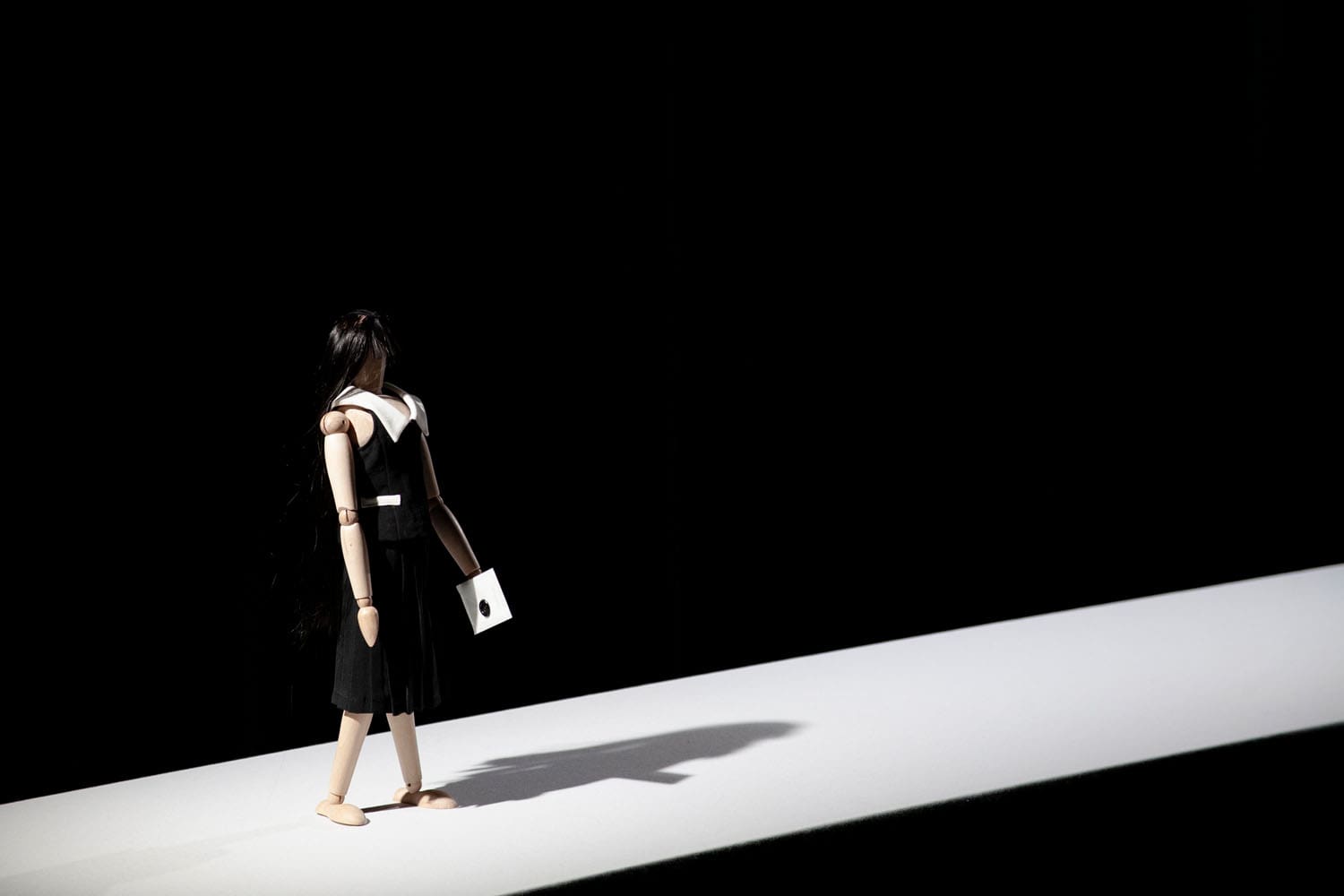
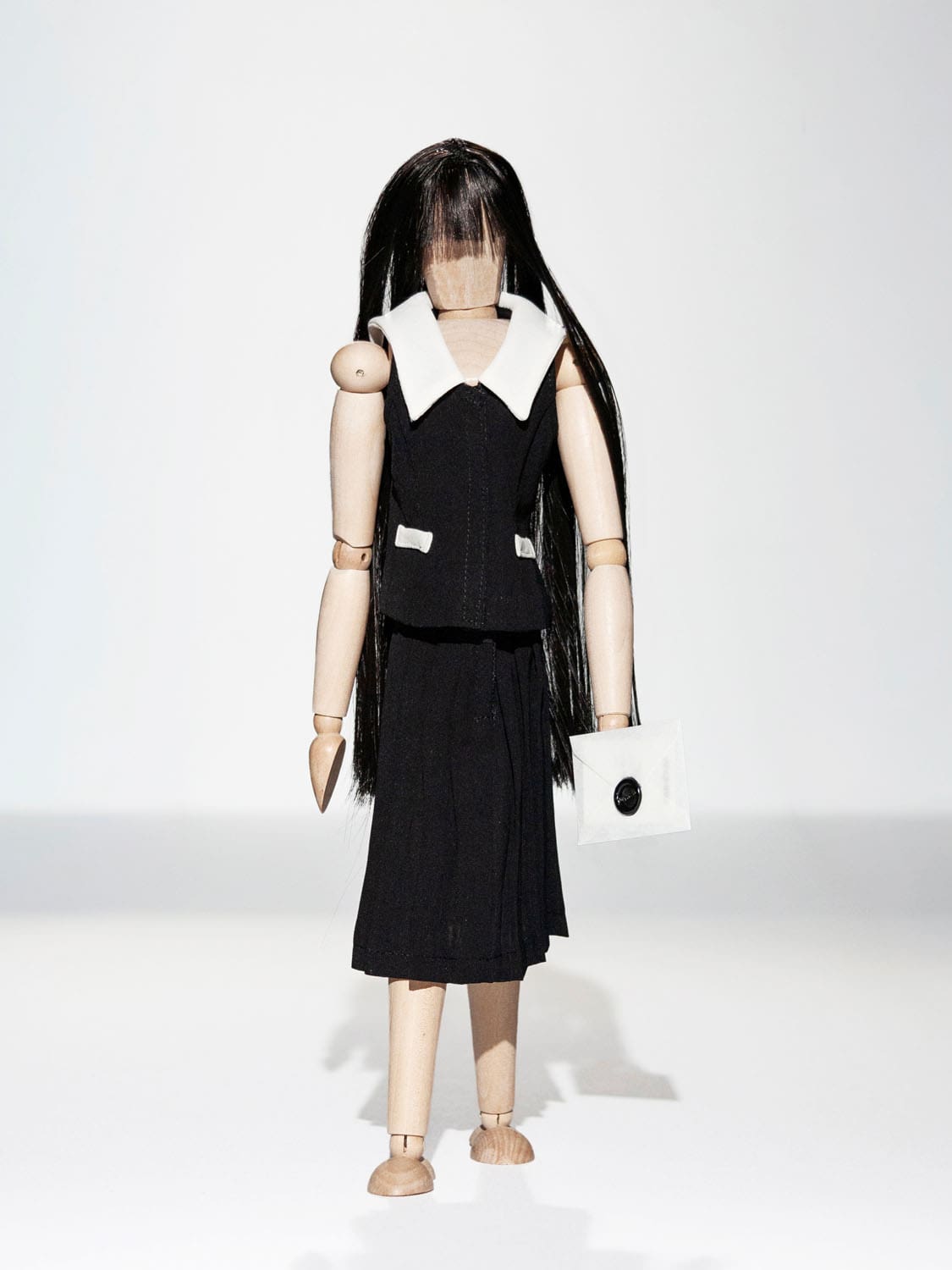
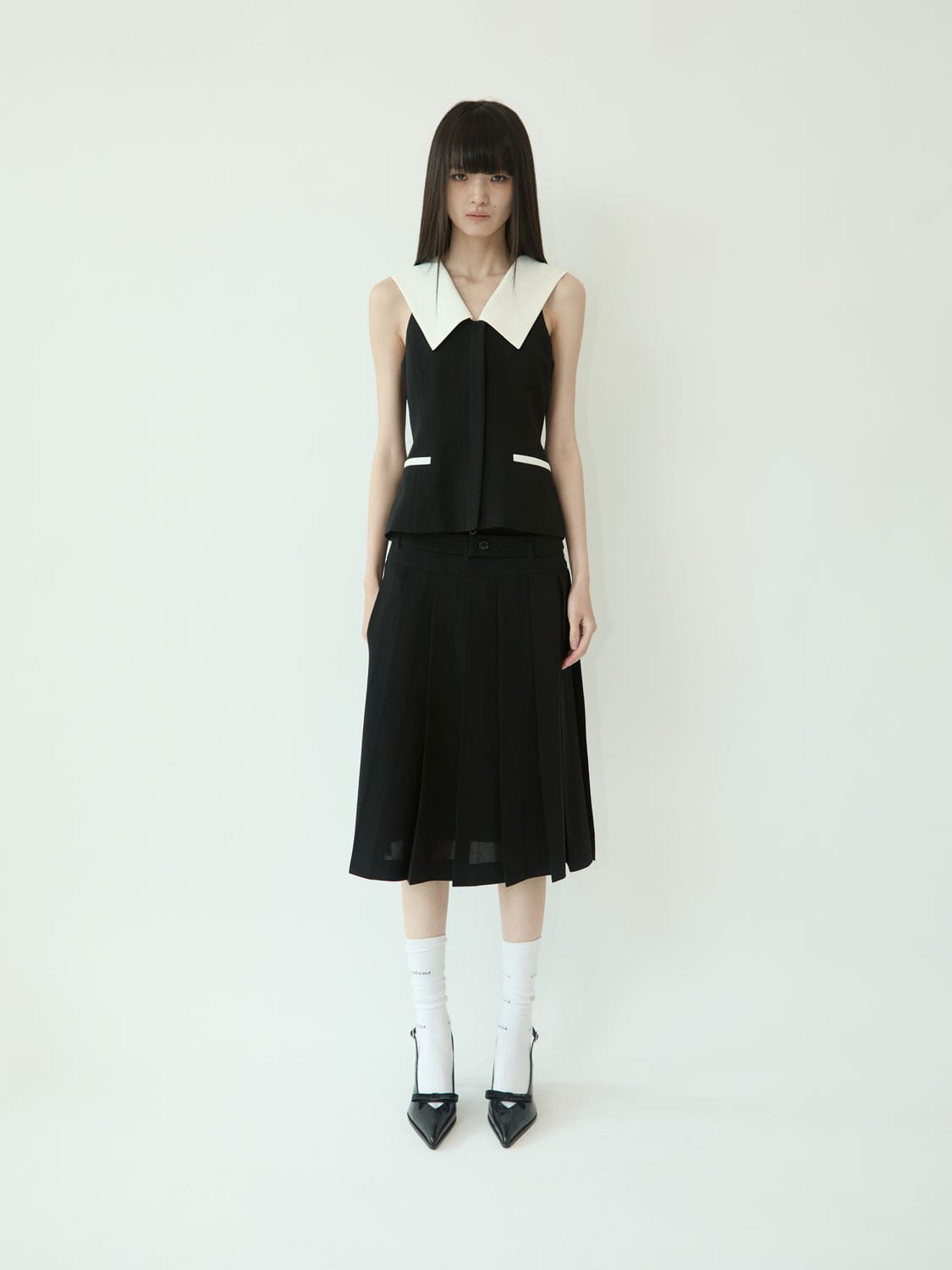
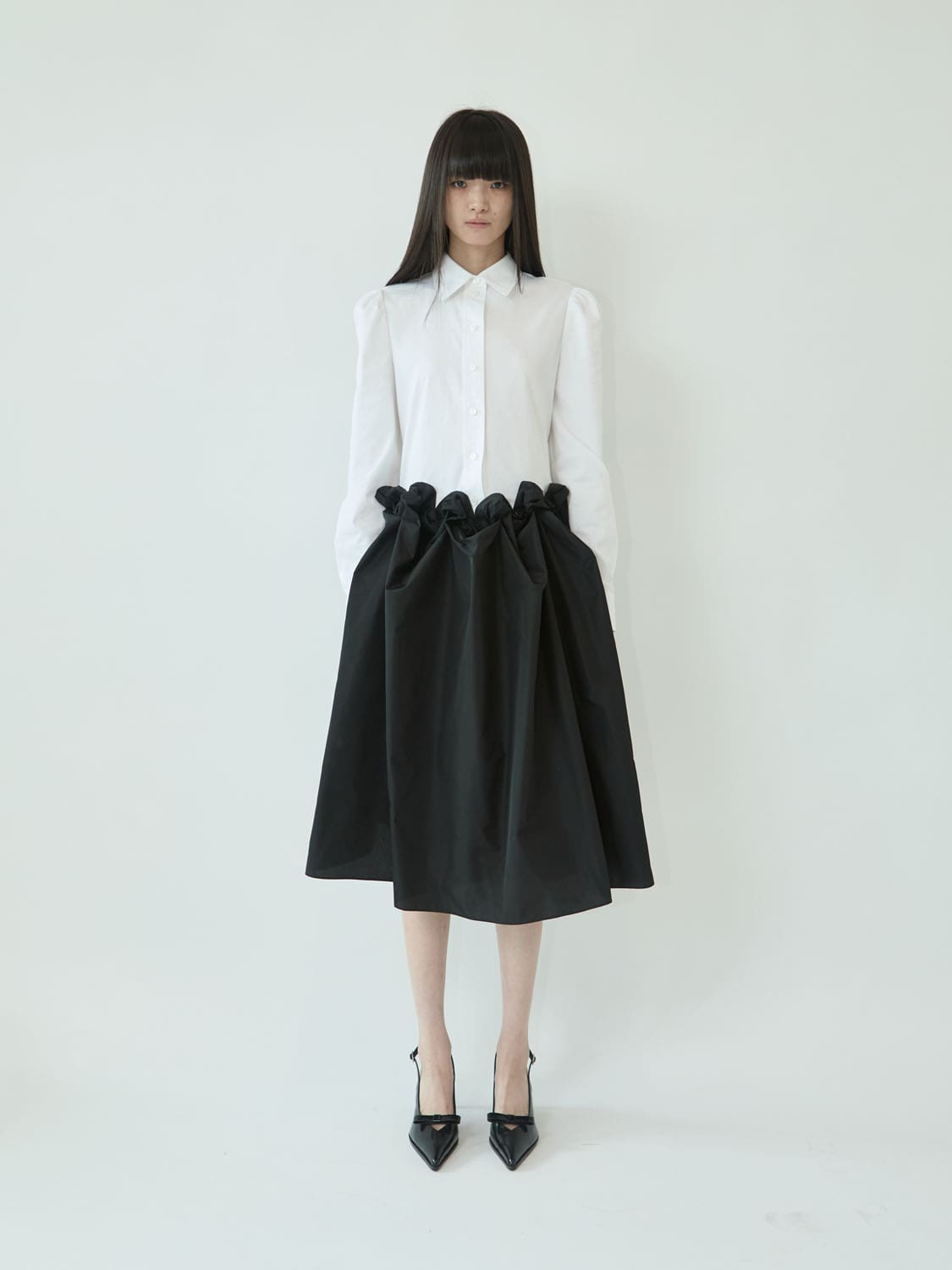
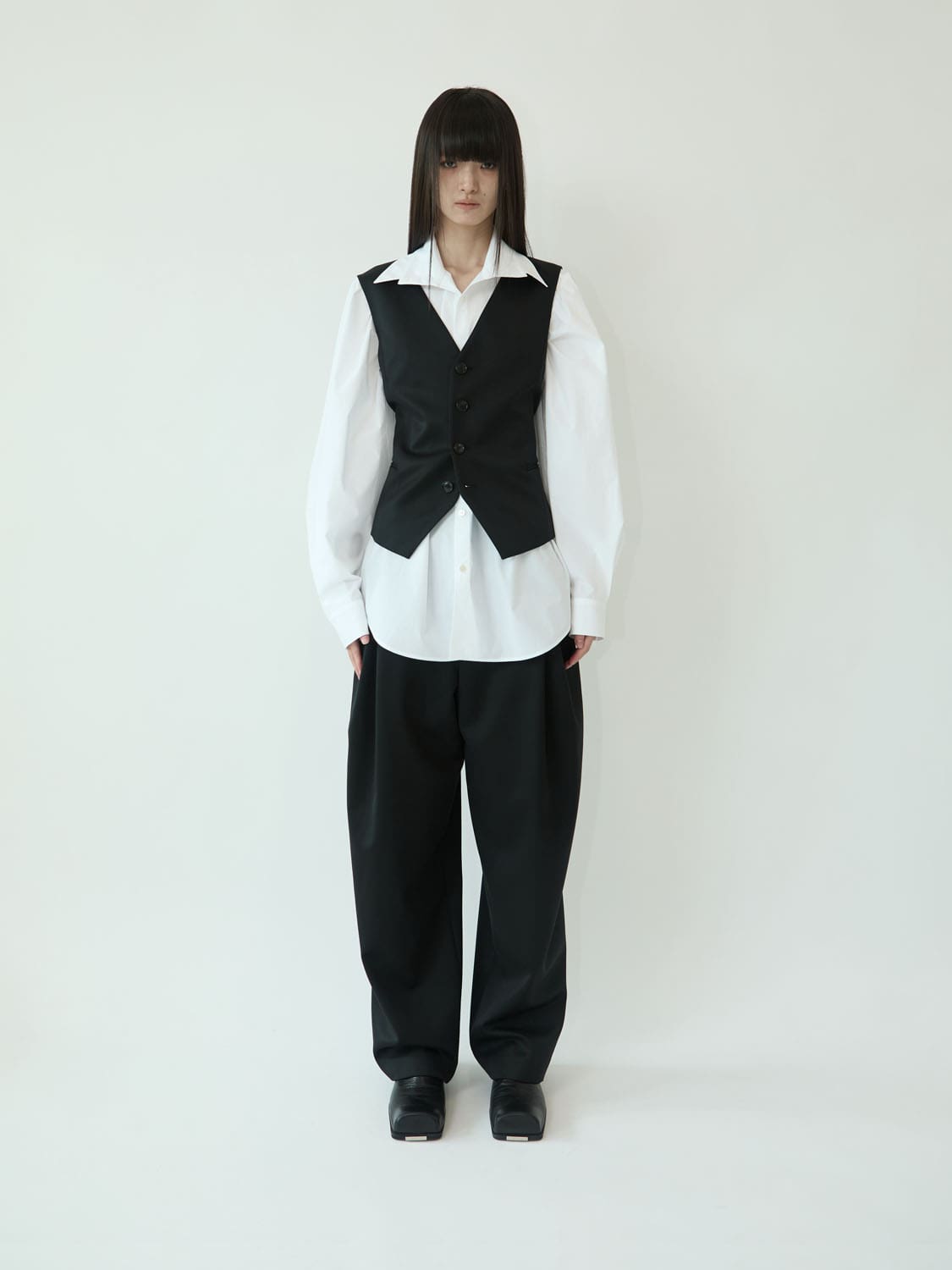
Consider the opening schoolgirl uniform, where academic austerity meets crisp couture tailoring. On the tiny wooden mannequin, a sleeveless black vest with exaggerated white wing collars and contrast flap pockets was paired with a razor-pleated knee-length black skirt, the doll clutching a miniature sealed white envelope with a wax stamp。 在 runway, the human model mirrored the gesture with uncanny precision: the stark white collar framing the clavicles, the pleats swaying in rigid rhythm, grounded by athletic white sports socks pulled into glossy black pointed pumps. The innocence of childhood dress-up was transformed into razor-sharp graphic discipline.
Origami Rosettes and the Deconstructed Poplin
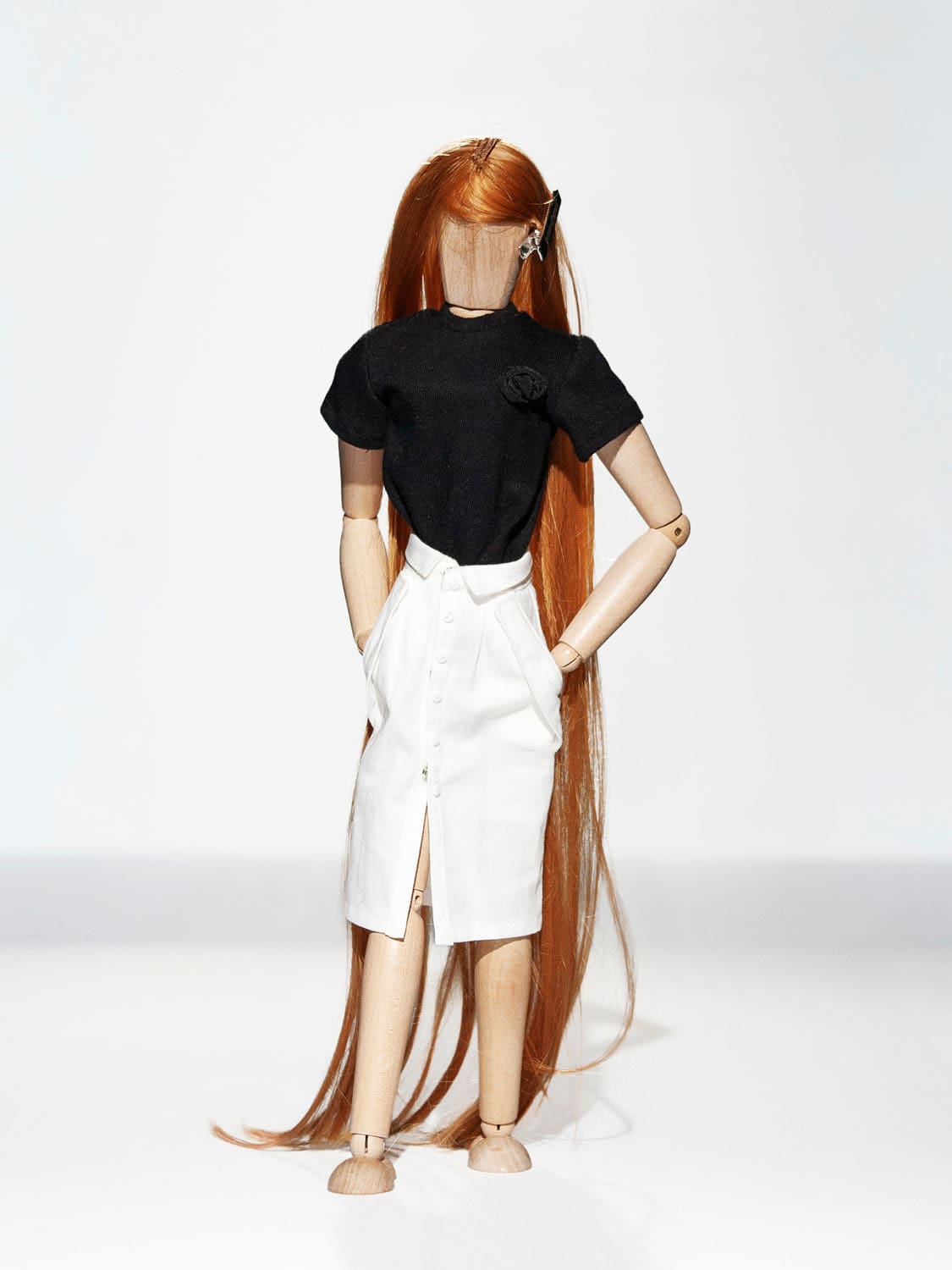
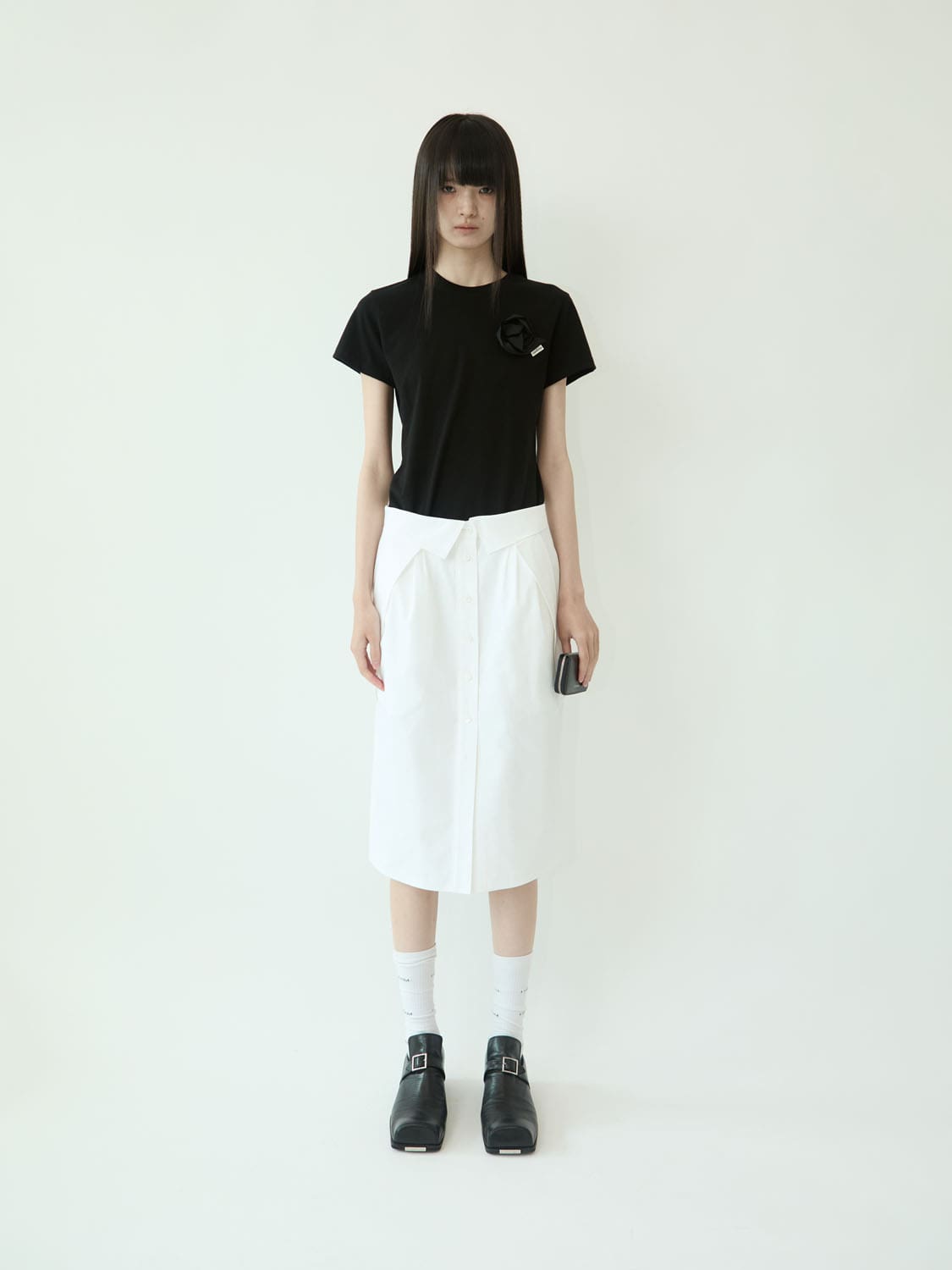
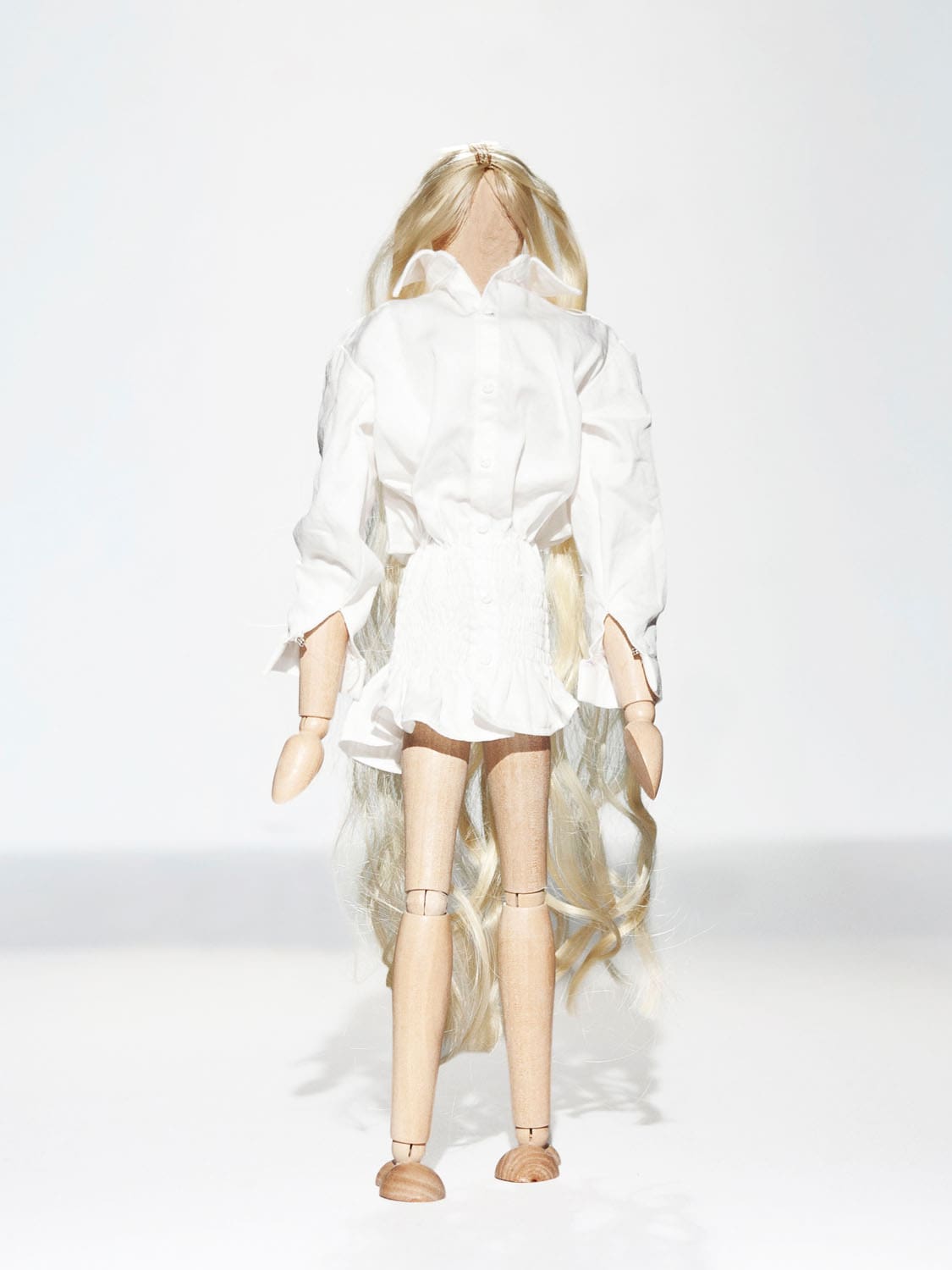
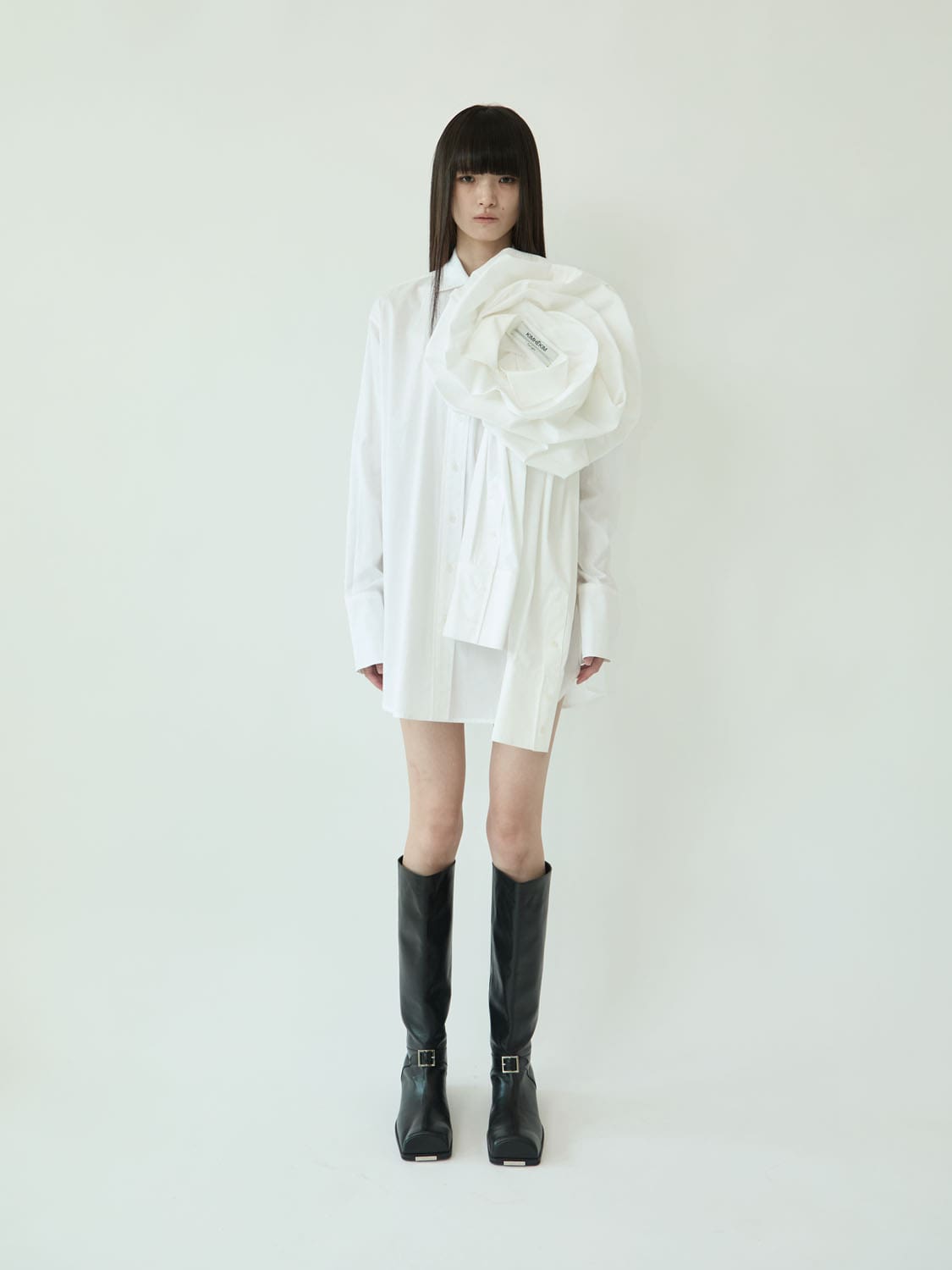
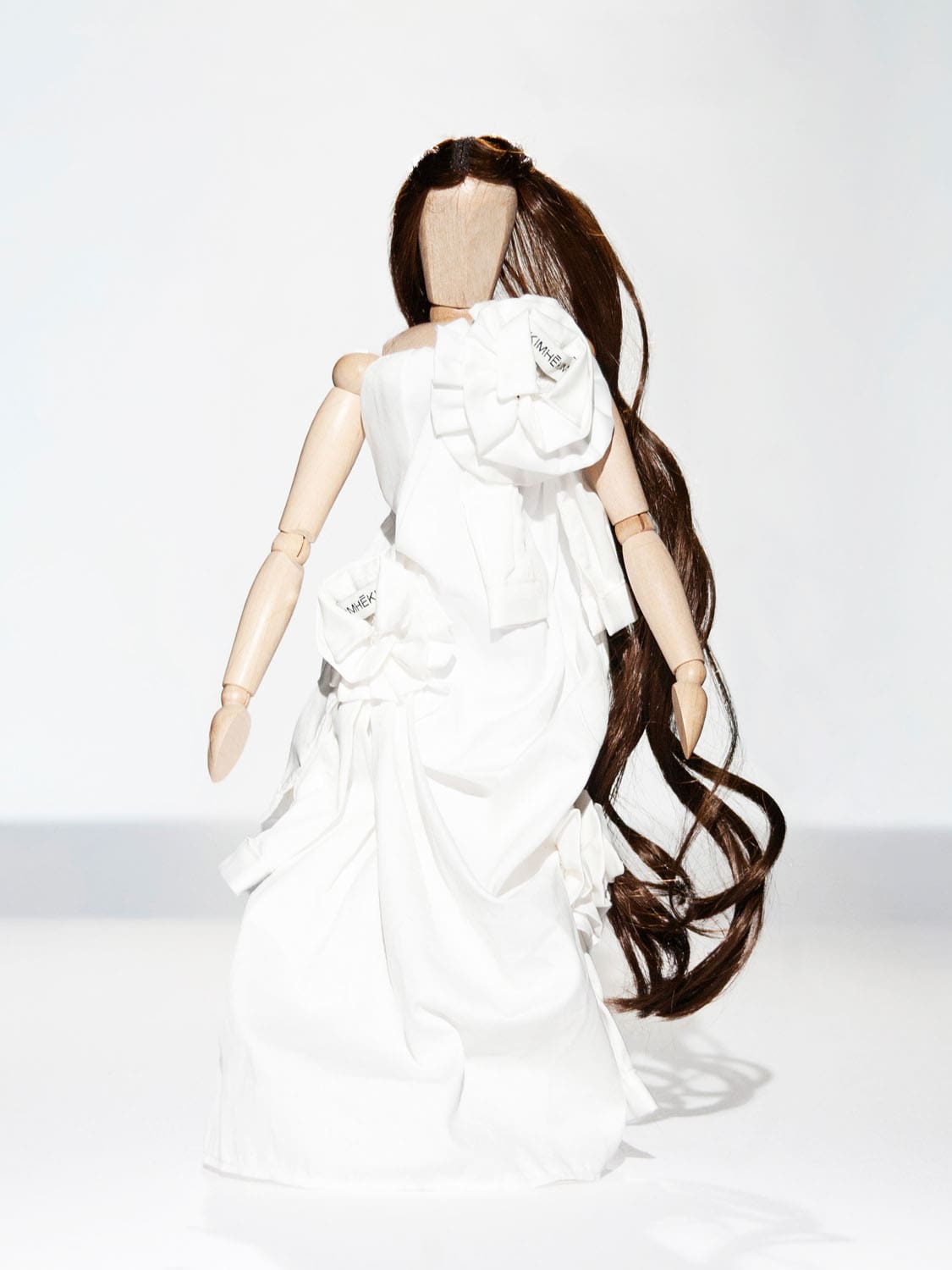
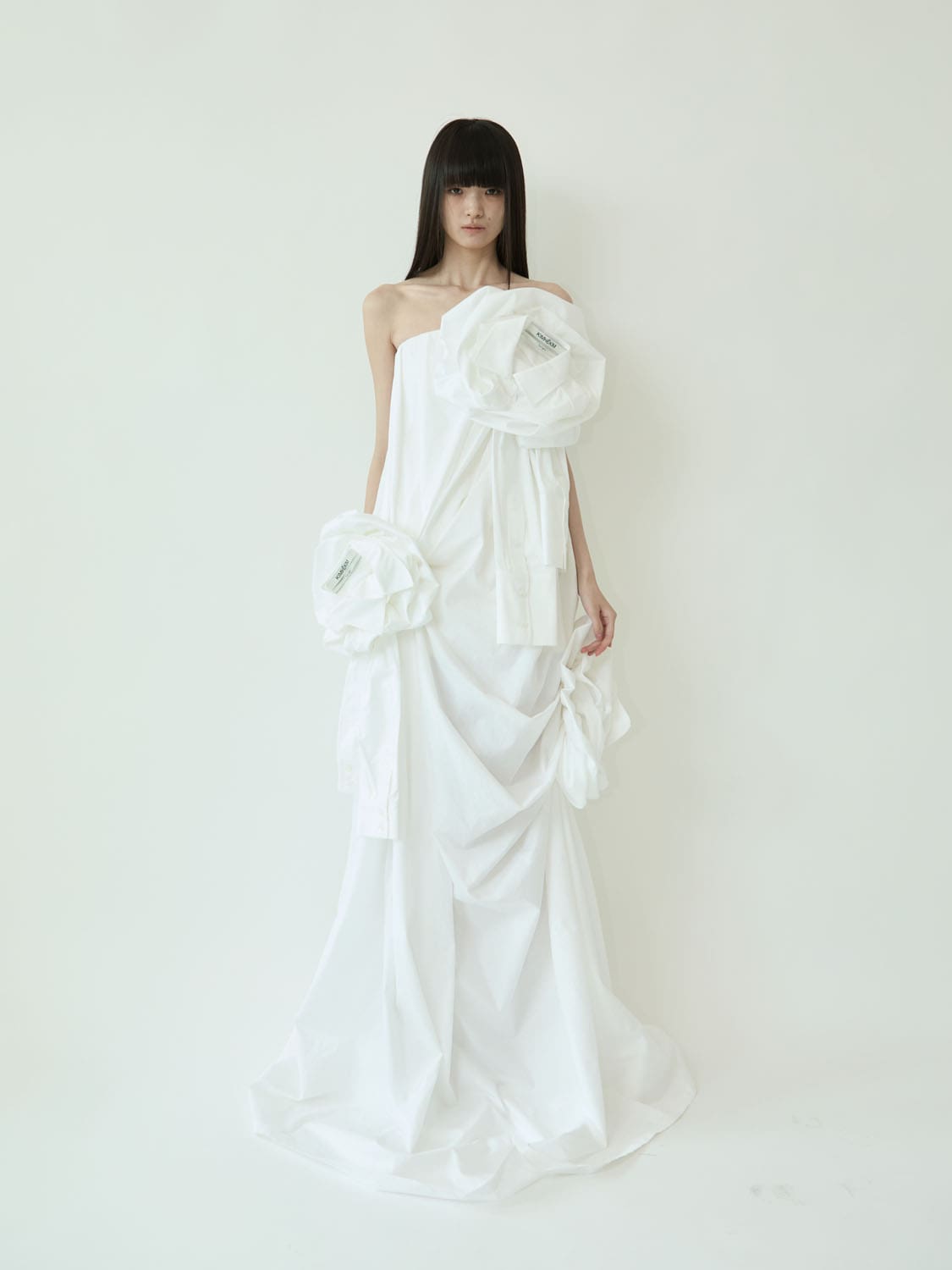
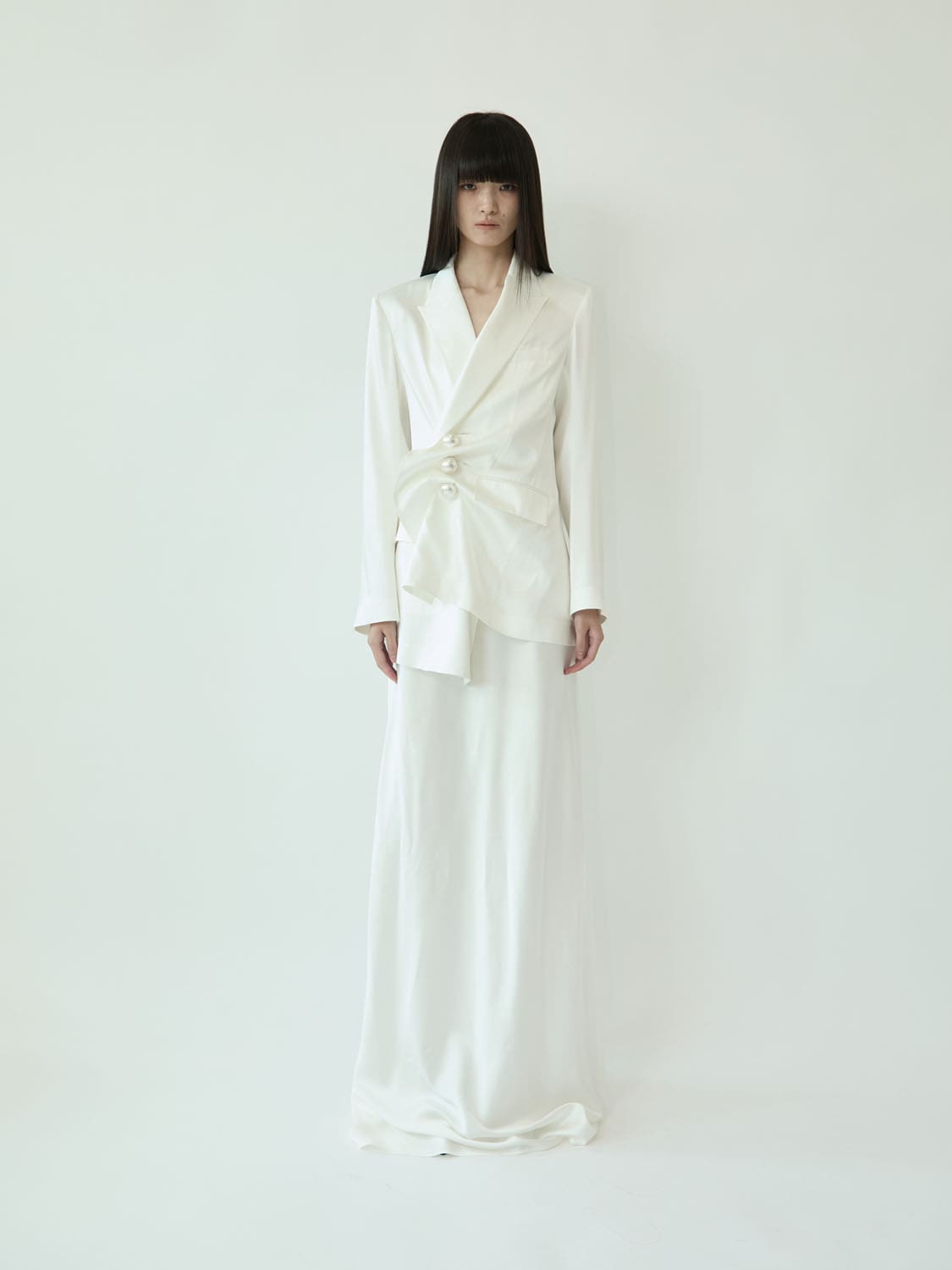
Kimhēkim has long used crisp shirting to explore sculptural drapery, yet here the cotton poplin bloomed with childlike romance. In an extraordinary bridal-white evening dress, the humble dress shirt was entirely reassembled into an asymmetric column gown. The garment hugged the figure in cascading spiral pleats, punctuated at the shoulder and hip by massive, hand-twisted fabric rosettes constructed from shirt collars and cuffs, complete with woven brand labels peeking out like postage stamps.
On the wooden doll, whose flowing chestnut hair swept the floorboards, the miniature dress looked like an impossibly fragile paper origami sculpture. On the living muse, the gown swept the white stage with monumental grace, transforming ordinary domestic poplin into an organic floral cascade. It was a visual reminder of what happens when a designer stops listening to market algorithms and simply plays with fabric on a tabletop.
The Tailcoat That Sweeps the Floor
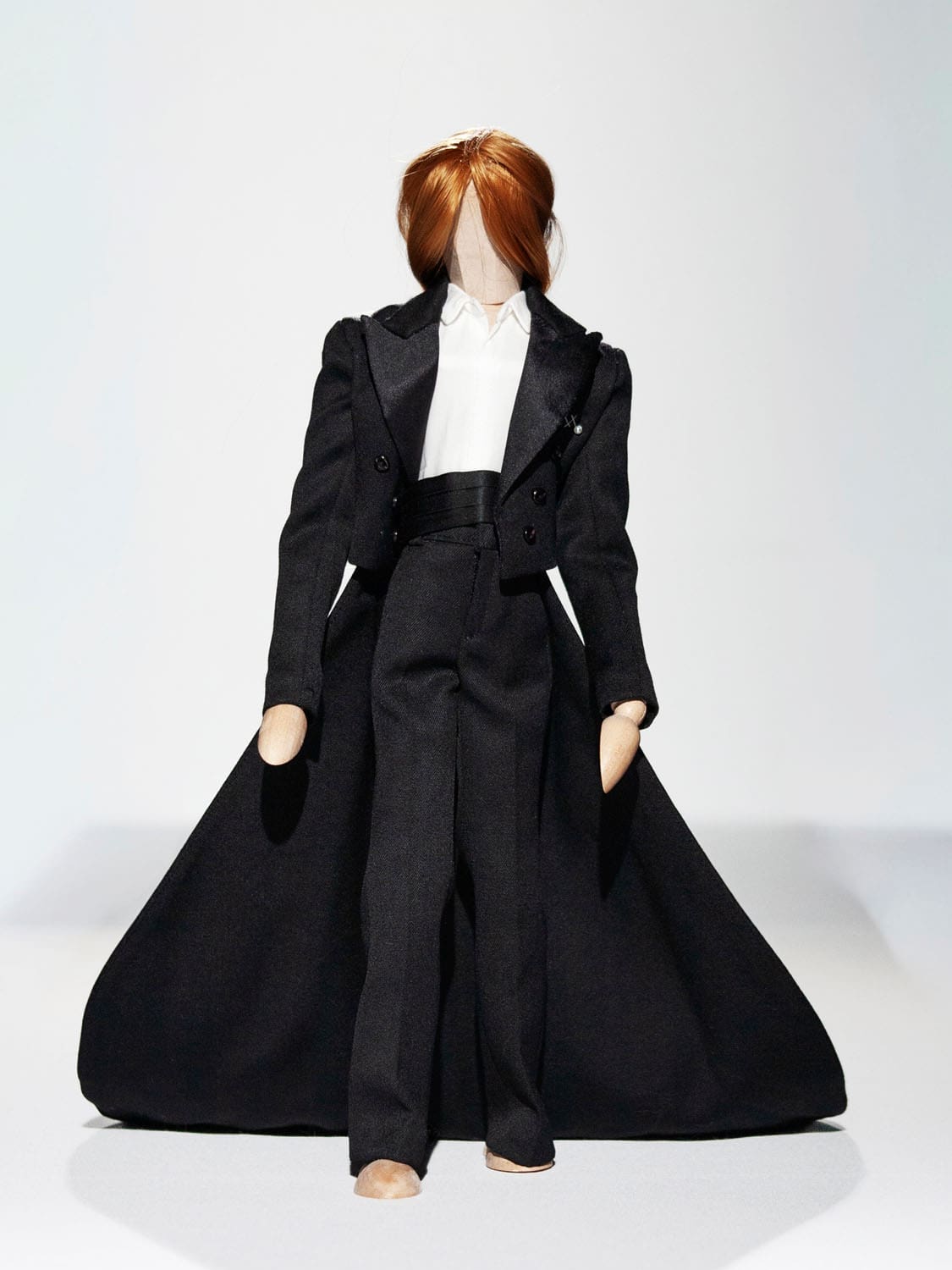
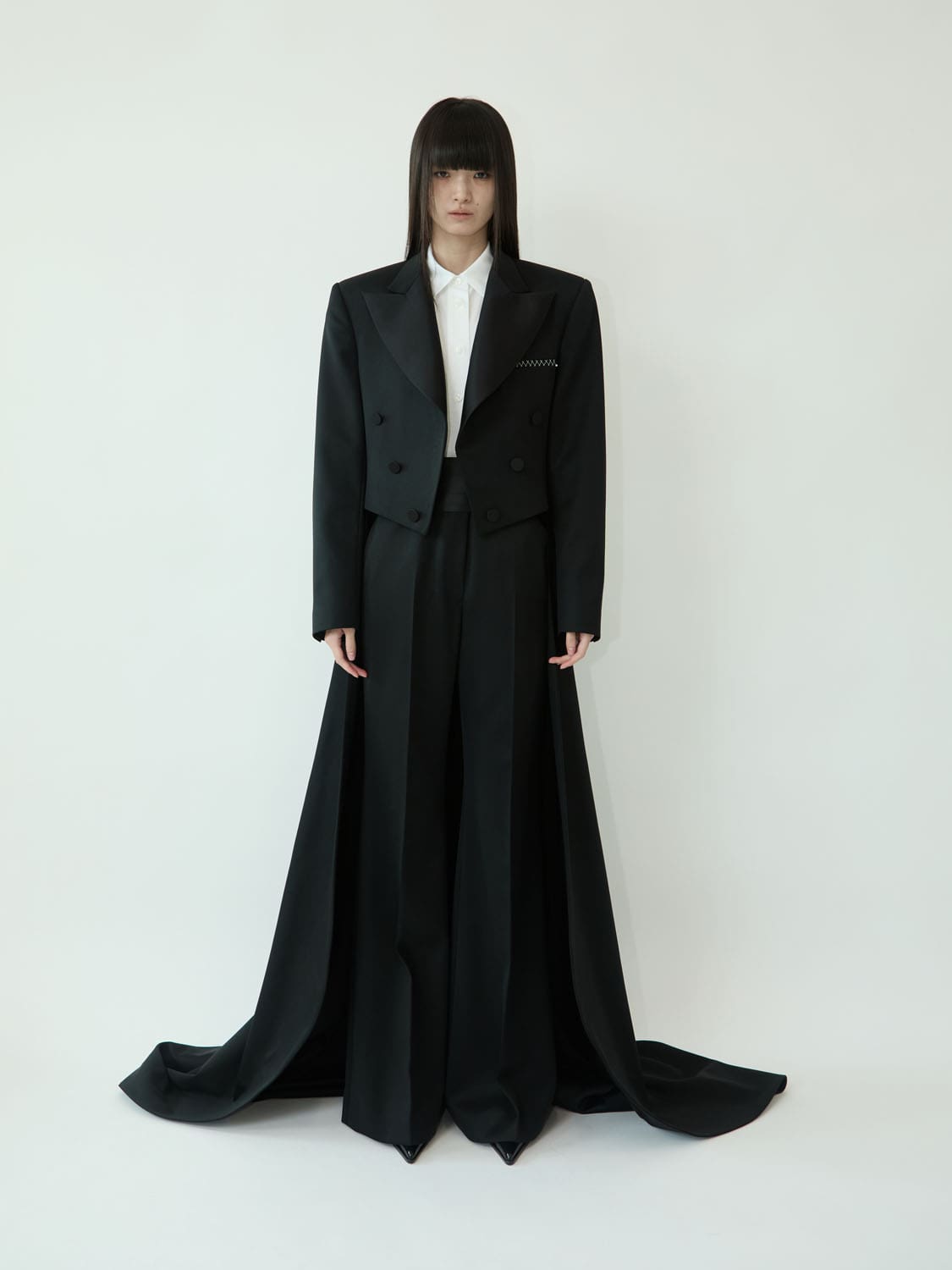
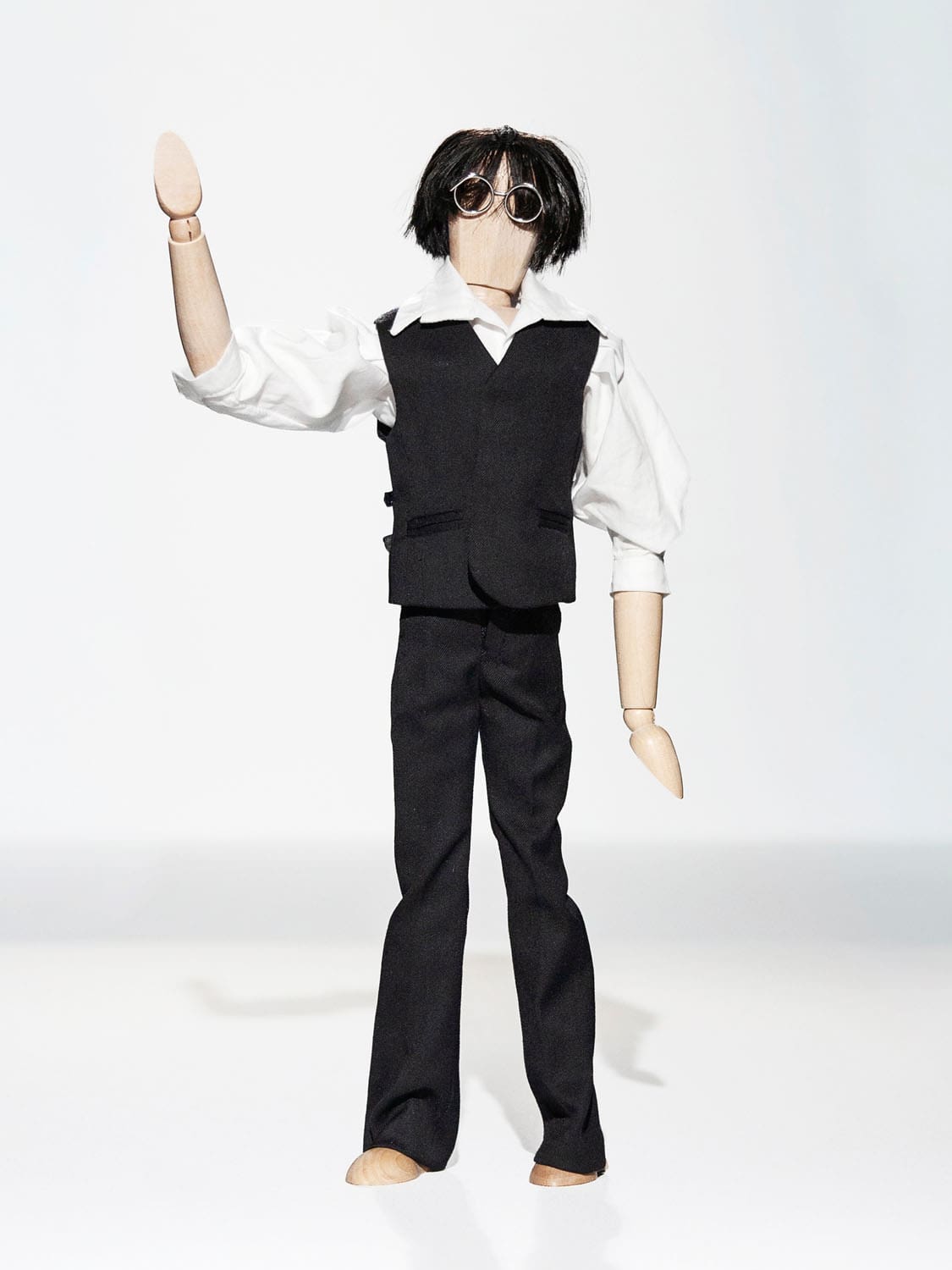
The study in black-and-white concluded with a theatrical confrontation between masculine evening attire and sweeping court dress. Kiminte dissected the traditional tuxedo into an elongated tailcoat silhouette. The jacket was cropped high above the midriff like an equestrian spencer, framed by wide satin peak lapels and a cummerbund that wrapped the ribs, before dropping into straight trousers and a colossal, floor-sweeping tuxedo train that flared out behind the stride like an ink spill.
On the red-haired wooden doll, the exaggerated proportions gave the puppet the dramatic poise of a miniature gothic conductor. On the human runway, the tailcoat moved with majestic authority, its pristine white shirt collar standing buttoned to the throat, the train dragging along the floor with unapologetic grandeur.
Ten years into his career, Kiminte Kimhēkim did not celebrate by staging a commercial retrospective or producing another round of safe merchandise. He returned to the table where he first fell in love with garments, picking up tiny wooden joints, scissors, and scraps of cloth. In a world that takes itself far too seriously, Little Wooden Dolls proved that fashion’s highest intellect often lives in its purest innocence: the quiet joy of imagining, shaping, and setting a doll free into the world.
